Dairy Products
Yogurt, ice cream, and dairy desserts — creamy mouthfeel and fiber enrichment.
Explore dairyA naturally occurring soluble dietary fiber and prebiotic from chicory root — widely used to increase fiber content, improve texture, support fat and sugar reduction, and enrich dairy, bakery, beverage, and nutritional formulations.
Inulin is a fructan composed of fructose units linked by β-(2→1) glycosidic bonds. Because humans lack enzymes to break these bonds, inulin passes through the small intestine largely intact — reaching the large intestine where it can be fermented by beneficial gut microorganisms.
Inulin is a non-digestible soluble carbohydrate classified as dietary fiber. Unlike starch or sucrose, it passes through the small intestine without significant digestion. It belongs to the fructan family with varying chain lengths (degree of polymerization) — available in short-chain, long-chain, and mixed-chain commercial forms.
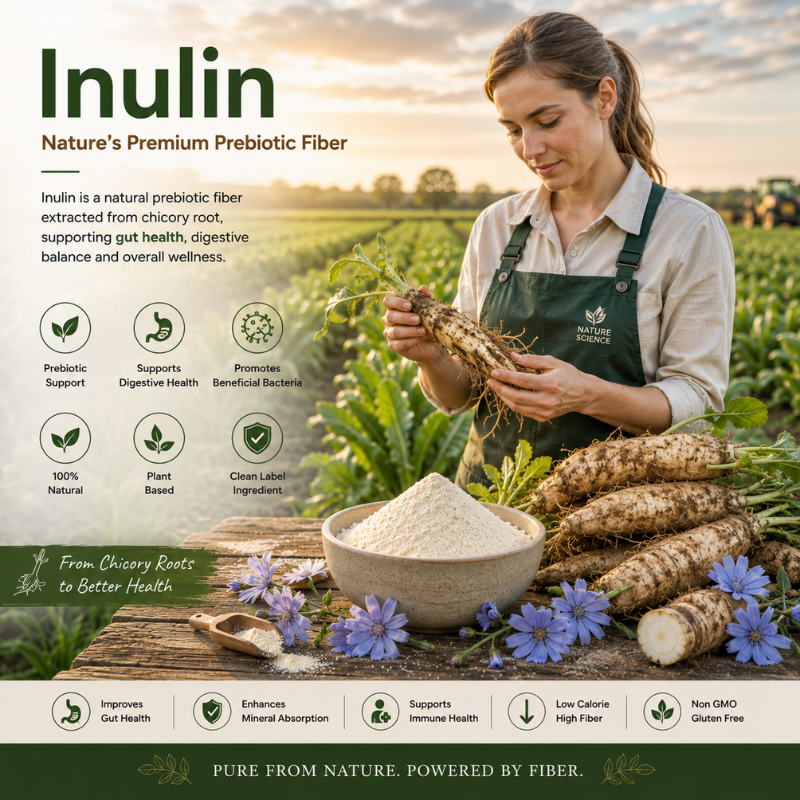
Commercial inulin is primarily extracted from chicory root (Cichorium intybus). It also occurs naturally in Jerusalem artichoke, agave, garlic, onion, leek, asparagus, banana, wheat, and dandelion root.
Inulin reaches the large intestine largely intact, where it serves as a fermentable substrate for certain beneficial intestinal microorganisms — meeting the accepted definition of a prebiotic dietary fiber.
Partner with the functional ingredient experts at Aspire Biozymes
Contact usScientific Overview
Inulin increases dietary fiber content, binds water for moisture retention, contributes creamy mouthfeel in dairy alternatives, and supports fat and sugar reduction strategies. Extracted from chicory root through controlled hot water extraction, purification, concentration, and drying — available in multiple chain lengths for different applications.
Explore full specificationsExplore chemical structure, manufacturing, functional properties, applications, and quality parameters for Inulin.
Inulin is a naturally occurring soluble dietary fiber belonging to the fructan family of carbohydrates. Composed primarily of fructose units linked by β-(2→1) glycosidic bonds, usually ending with a glucose molecule, inulin is not digested by human digestive enzymes in the small intestine and reaches the large intestine largely intact.
Widely used in food, beverage, dairy, bakery, nutritional supplement, and functional food industries — inulin increases dietary fiber content, improves texture, replaces part of fat or sugar in selected formulations, and contributes to product stability.
Inulin is a soluble dietary fiber from the fructan family, commercially extracted from chicory root. Resistant to small intestine digestion, it reaches the large intestine where it can be fermented by beneficial microorganisms. Functional properties include water binding, texture enhancement, fiber enrichment, and fat replacement — making it important in dairy, bakery, beverages, and dietary supplements.
Inulin is composed mainly of fructose molecules with a terminal glucose molecule in most molecules. Fructose units are connected through β-(2→1) glycosidic bonds.
Commercial products are available in short-chain, long-chain, and mixed-chain forms — each offering different functional properties in food applications.
Inulin is widely recognized as a prebiotic dietary fiber — a substrate selectively utilized by beneficial microorganisms in the gastrointestinal tract. Extent of fermentation depends on individual gut microbiota composition, dietary habits, and amount consumed.
Increases dietary fiber content of foods and beverages without significantly altering flavor when used appropriately.
Binds water, contributing to moisture retention and product stability in various formulations.
Contributes creamy mouthfeel and improved texture in dairy alternatives, yogurts, and spreads.
In certain formulations, can replace part of the fat while maintaining desirable texture and consistency — level depends on formulation and processing conditions.
May be used as part of sugar-reduction strategies by contributing bulk and texture where sugar content is reduced.
Yogurt, drinking yogurt, ice cream, dairy desserts, and cheese spreads — improving texture and increasing dietary fiber content.
Bread, biscuits, cookies, cakes, and muffins — fiber enrichment with support for texture and moisture retention.
Nutritional drinks, protein beverages, meal replacement beverages, and functional beverages.
Fiber supplements, powdered nutrition products, functional nutrition blends, and meal replacement products.
Nutrition bars, chocolate products, gummies, and chewy snacks — contributing fiber while supporting product structure.
Beyond food manufacturing, inulin is used in nutraceutical formulations, pharmaceutical excipients, dietary supplements, functional ingredient blends, and medical nutrition products.
Proper storage helps prevent moisture absorption and preserves product stability.
Commercial inulin is evaluated for inulin content, moisture content, appearance, particle size, solubility, microbiological quality, heavy metals, and food safety compliance. Additional specifications may be established per customer requirements.
Commercial inulin should comply with regulations governing food ingredients, dietary fiber labeling, food safety standards, GMP, microbiological specifications, and contaminant limits. Requirements vary by destination market and intended application.
Soluble fiber enrichment and functional texture across dairy, bakery, and beverage applications.
Yogurt, ice cream, and dairy desserts — creamy mouthfeel and fiber enrichment.
Explore dairyBread, biscuits, and cakes — fiber enrichment with texture and moisture retention.
Explore bakeryNutritional drinks, fiber supplements, and meal replacement formulations.
Explore nutritionFructan with β-(2→1) glycosidic bonds — short-chain, long-chain, and mixed-chain variants available for different applications.
Store in cool, dry conditions with sealed containers. Protect from moisture and direct sunlight to preserve stability.
Reaches the large intestine intact where it serves as fermentable substrate for beneficial gut microorganisms.
Inulin is a naturally occurring soluble dietary fiber belonging to the fructan family, composed mainly of fructose units.
Most commercial inulin is extracted from chicory root, although it also occurs naturally in vegetables such as garlic, onion, asparagus, and Jerusalem artichoke.
Yes. Inulin is classified as a soluble dietary fiber because it is not digested in the small intestine.
Inulin reaches the large intestine largely intact, where it can be fermented by certain beneficial intestinal microorganisms, meeting the accepted definition of a prebiotic.
Dairy products, bakery foods, beverages, dietary supplements, meal replacements, nutrition bars, confectionery, and other functional food formulations.
Request specifications, samples, or pricing from Aspire Biozymes.