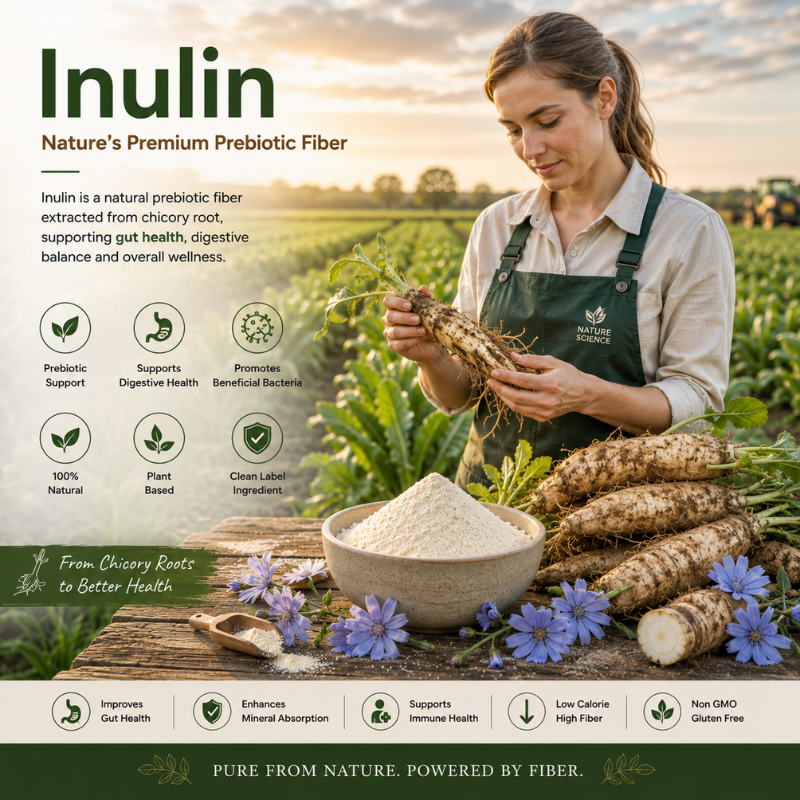
Inulin
Naturally occurring fructan from chicory root for dairy, bakery, beverages, and functional foods.
Explore inulinA comprehensive guide to soluble dietary fiber — its types, sources, functional properties, manufacturing methods, and applications in modern food and beverage production.
Dietary fiber is an important component of many food formulations and is broadly classified into soluble and insoluble fiber. Soluble dietary fiber dissolves or disperses in water to varying degrees, depending on its chemical structure, and is widely used in food manufacturing because of its functional properties.
Commercial soluble dietary fibers are incorporated into beverages, dairy products, bakery foods, confectionery, nutritional supplements, meal replacement products, plant-based foods, and functional foods. Beyond contributing dietary fiber, many soluble fibers also improve texture, mouthfeel, stability, and formulation flexibility.
Understanding the different types of soluble dietary fiber helps food manufacturers select ingredients that meet product performance, processing, and regulatory requirements.
Soluble dietary fiber is a group of carbohydrate-based substances that dissolve or disperse in water and resist digestion by human digestive enzymes in the small intestine. Depending on the specific ingredient and regulatory definition, these fibers are classified as dietary fiber because they reach the large intestine largely intact.
Unlike digestible carbohydrates such as starch or sucrose, soluble fibers have chemical structures that limit digestion by human enzymes. Different soluble fibers vary considerably in molecular structure, chain length, solubility, viscosity, fermentability, and functional behavior in food systems.
Explore commercial soluble dietary fiber ingredients for beverage, dairy, bakery, nutritional, and plant-based food applications.
Naturally occurring fructan from chicory root for dairy, bakery, beverages, and functional foods.
Explore inulin
Short-chain fructans valued for high water solubility and mild sweetness.
Explore FOS
Highly soluble, low-viscosity fiber from controlled starch processing for beverages and nutrition.
Explore resistant dextrin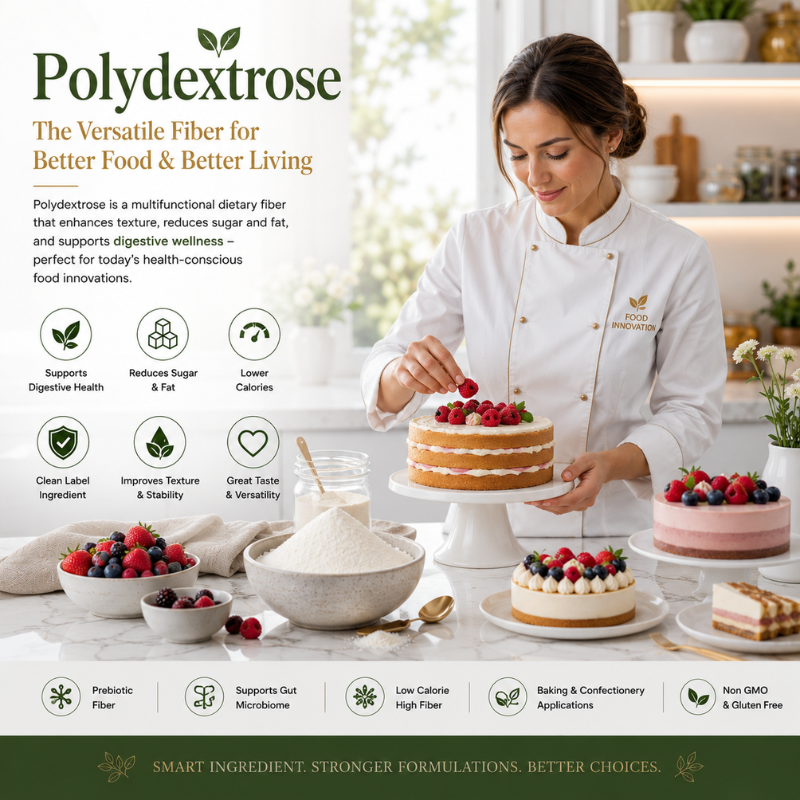
Synthetic soluble fiber for bulking, texture modification, and reduced-sugar formulations.
Explore polydextroseCommercial food manufacturers use a wide variety of soluble fiber ingredients. Aspire Biozymes supplies inulin, FOS, resistant dextrin, and polydextrose.
A naturally occurring fructan extracted primarily from chicory root. Contributes dietary fiber, texture, and bulk to dairy, bakery, functional beverages, plant-based foods, and nutritional products.
Short-chain fructose molecules valued for high water solubility and mild sweetness. Used in beverages, yogurt, nutrition bars, dietary supplements, and functional foods.
Produced through controlled starch processing. Highly soluble, low viscosity, and neutral taste — particularly suitable for beverages and nutritional products.
A synthetic soluble dietary fiber produced through glucose polymerization. Widely used as a bulking agent and texture modifier in reduced-sugar and fiber-enriched products.
Additional commercially used soluble fibers include beta-glucans, pectin, gum arabic, guar gum, psyllium (partially soluble), and acacia fiber. Ingredient selection depends on the desired functionality and product formulation.
Commercial soluble fibers originate from different raw materials and production methods.
Many soluble fibers are extracted from chicory root, corn, wheat, tapioca, cassava, fruits, vegetables, and cereals.
Some specialty soluble fibers are produced through controlled microbial fermentation.
Certain ingredients, such as polydextrose, are manufactured through controlled industrial processes using food-grade raw materials.
Different soluble fibers provide different technological functions in food and beverage formulations.
Most soluble fibers dissolve or disperse readily in water, making them suitable for liquid and powdered formulations.
Many soluble fibers contribute to mouthfeel, body, and texture in dairy foods, beverages, desserts, and bakery products.
Certain fibers help maintain product volume and structure, particularly in reduced-sugar or reduced-fat formulations.
Some soluble fibers form highly viscous solutions, while others such as resistant dextrin and polydextrose maintain relatively low viscosity even at higher concentrations.
Commercial soluble fibers are generally compatible with proteins, vitamins, minerals, sweeteners, plant extracts, and other functional ingredients.
Manufacturing
Production methods vary according to the fiber type. Each process is designed to achieve consistent quality and functional performance.
Soluble dietary fibers are widely used across the food industry.
Functional drinks, nutritional beverages, powder drink mixes, and meal replacement beverages.
Explore beveragesYogurt, dairy desserts, ice cream, drinking yogurt, and dairy alternatives.
Explore dairyProtein powders, meal replacements, nutrition bars, and functional nutrition products.
Explore sports nutritionFiber supplements, powder blends, capsules, tablets, and sachets.
Explore dietary supplementsPlant-based beverages, dairy alternatives, meat alternatives, vegan desserts, and functional foods.
Explore plant-based foodsChoosing a soluble dietary fiber depends on several formulation factors. Manufacturers often evaluate multiple fiber ingredients or blends to achieve the required product performance.
Commercial soluble dietary fibers are commonly evaluated against defined specifications. Requirements vary according to the ingredient and intended application.
Soluble dietary fiber ingredients should comply with applicable regulations concerning food ingredient standards, dietary fiber definitions, food safety requirements, Good Manufacturing Practices (GMP), ingredient labeling, and country-specific regulatory requirements.

Soluble dietary fiber comprises a diverse group of carbohydrate-based ingredients that dissolve or disperse in water and are resistant to digestion in the small intestine.
Common commercial soluble fibers include inulin, fructooligosaccharides (FOS), resistant dextrin, and polydextrose, each offering distinct functional properties such as texture contribution, bulking, water solubility, and formulation flexibility.
These ingredients are widely used in beverages, dairy products, bakery foods, nutritional products, dietary supplements, and plant-based foods. Selecting the appropriate soluble fiber depends on formulation, processing conditions, regulatory requirements, and desired functional characteristics.
Soluble dietary fiber is a group of carbohydrate-based ingredients that dissolve or disperse in water and resist digestion in the small intestine, depending on their chemical structure.
Common commercial soluble fibers include inulin, fructooligosaccharides (FOS), resistant dextrin, polydextrose, beta-glucans, pectin, gum arabic, and guar gum.
It is widely used in beverages, dairy products, bakery foods, nutritional supplements, meal replacement products, dietary fiber supplements, confectionery, and plant-based foods.
Manufacturing methods vary by ingredient and include hot water extraction, enzymatic conversion, controlled starch processing, microbial fermentation, and thermal polymerization.
Selection depends on factors such as solubility, viscosity, texture, processing conditions, product stability, labeling requirements, regulatory compliance, and the desired functionality in the finished food or beverage product.
Explore Inulin, FOS, Resistant Dextrin, Polydextrose, and the complete functional ingredients portfolio from Aspire Biozymes.