Dietary Fiber
Gut Health
Understanding the gut microbiome, the role of dietary fiber and prebiotics, and how functional ingredients support modern nutrition product development.
The foundation of digestive wellness nutrition
Gut health has become one of the most important topics in nutrition science and food innovation. The human digestive tract is home to trillions of microorganisms, collectively known as the gut microbiome, which forms a complex ecosystem that interacts with digestion, nutrient metabolism, and other normal physiological processes.
Modern dietary patterns, food choices, and lifestyle factors can influence the composition and activity of the gut microbiome. As a result, food manufacturers are increasingly incorporating dietary fibers and prebiotic ingredients into functional foods, beverages, and nutritional products.
Aspire Biozymes supplies high-quality soluble dietary fibers that support the development of innovative food and nutrition products designed for today's health-conscious consumers.
What is gut health?
Gut health generally refers to the normal structure and function of the gastrointestinal (GI) tract, including efficient digestion, nutrient absorption, intestinal barrier function, and a balanced gut microbiome.
The digestive system includes the mouth, esophagus, stomach, small intestine, large intestine (colon), and rectum. Each section plays a specific role in digestion and nutrient processing.
A healthy digestive system depends on the coordinated function of digestive organs, digestive enzymes, intestinal cells, and the microorganisms that naturally inhabit the gastrointestinal tract.
What is the gut microbiome?
The gut microbiome is the community of microorganisms—including bacteria, fungi, viruses, and other microbes—that naturally live in the digestive tract.
These microorganisms interact with the food we consume and contribute to normal digestive processes. The composition of the gut microbiome varies from person to person and can be influenced by factors such as dietary habits, age, lifestyle, environment, medication use, and genetics. Researchers continue to study the complex relationship between the gut microbiome and overall human health.
The role of dietary fiber
Dietary fiber is one of the most important nutritional components associated with gut health.
Unlike digestible carbohydrates, dietary fiber is not completely broken down by digestive enzymes in the small intestine. Depending on the type of fiber, it may pass into the large intestine where it can be fermented by certain microorganisms.
Commercial soluble fibers commonly used in food manufacturing include inulin, fructooligosaccharides (FOS), resistant dextrin, and polydextrose. These ingredients are widely incorporated into food and beverage products because of their nutritional value and formulation versatility.
Learn more in our what is dietary fiber guide and prebiotics explained guide.
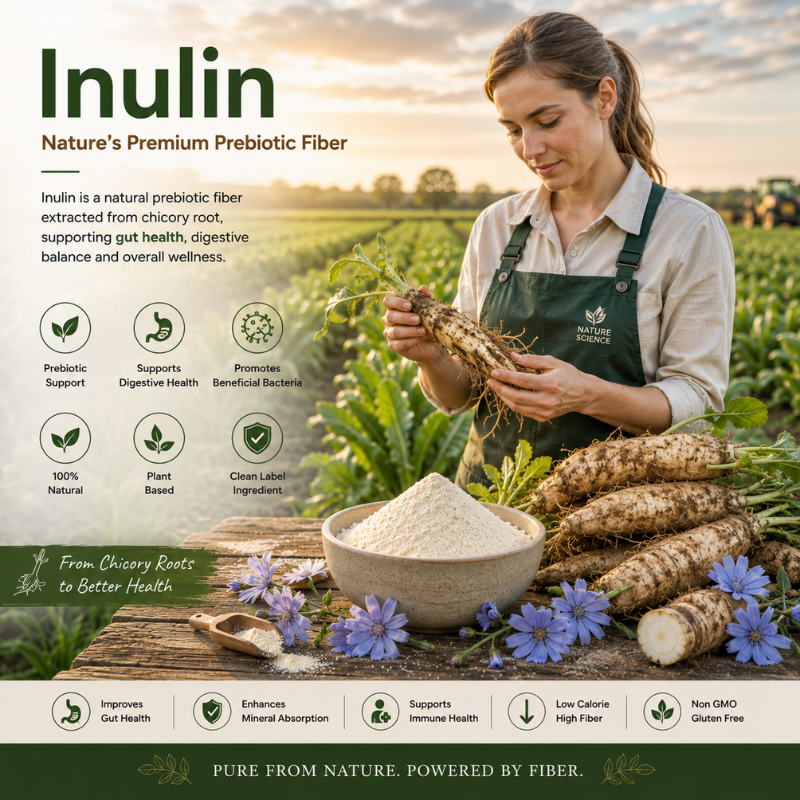
Inulin
Prebiotic soluble fiber from chicory root
Inulin is a naturally occurring soluble fiber commonly obtained from chicory root and other plant sources. Applications include functional beverages, protein powders, dairy alternatives, nutrition bars, and meal replacements.
View InulinFructooligosaccharides (FOS)
Well-established prebiotic ingredient
FOS is another well-established prebiotic ingredient widely used in functional foods, dietary supplements, nutritional beverages, and plant-based products. These ingredients are selected not only for their nutritional role but also for their excellent processing characteristics.
View FOSFactors that influence gut health
Several lifestyle and dietary factors contribute to maintaining normal digestive function.
Balanced diet
A varied diet containing fruits, vegetables, legumes, whole grains, and other fiber-rich foods provides a diverse range of nutrients and dietary fibers.
Hydration
Adequate fluid intake supports normal digestive processes and complements dietary fiber intake.
Physical activity
Regular physical activity contributes to overall health and is commonly recommended as part of a healthy lifestyle.
Sleep and stress management
Sleep quality and stress management are increasingly recognized as important lifestyle factors that may influence digestive well-being and overall health.
Food choices
Consuming a variety of minimally processed foods and fiber-rich ingredients contributes to a balanced dietary pattern.
Foods that naturally contain dietary fiber
Many plant-based foods naturally provide dietary fiber as part of a balanced diet.
Fruits
Apples, pears, bananas, berries, and citrus fruits.
Vegetables
Broccoli, carrots, spinach, onions, and garlic.
Legumes
Lentils, chickpeas, beans, and peas.
Whole grains
Oats, barley, brown rice, and whole wheat.
Nuts and seeds
Almonds, chia seeds, flaxseed, and sunflower seeds.
Functional ingredients for food manufacturers
Food manufacturers increasingly use functional fibers to develop products that align with consumer demand for digestive wellness.
Inulin
Known for excellent solubility, smooth mouthfeel, beverage compatibility, and formulation versatility. View Inulin
Fructooligosaccharides (FOS)
Suitable for powder supplements, functional beverages, dairy alternatives, and nutritional products. View FOS
Resistant Dextrin
Offers high water solubility, neutral flavor, low viscosity, and excellent beverage compatibility. View Resistant Dextrin
Polydextrose
Frequently incorporated into functional foods, nutrition bars, meal replacements, and reduced-sugar products. View Polydextrose
Applications in food manufacturing
Gut health-focused ingredients are widely used across functional beverages, sports nutrition, dairy alternatives, functional foods, and dietary supplements.
- Functional Beverages
- Sports Nutrition
- Dairy Alternatives
- Functional Foods
- Dietary Supplements
Applications by industry
Functional beverages
Nutritional beverages, high-fiber drinks, plant-based beverages, and meal replacement drinks.
Sports nutrition
Protein powders, recovery beverages, sports supplements, and functional nutrition products.
Dairy alternatives
Plant-based milk, yogurt alternatives, and dairy-free beverages.
Functional foods
Nutrition bars, breakfast cereals, fortified snacks, and ready-to-mix products.
Dietary supplements
Powder supplements, capsules, sachets, and functional ingredient blends.
Formulation considerations
Manufacturers evaluate several factors when selecting gut health ingredients.
- Solubility
- Stability during processing
- Flavor compatibility
- Texture contribution
- Processing conditions
- Target fiber content
- Product format
- Regulatory requirements
Selecting appropriate ingredients helps ensure consistent product performance and consumer acceptance.
Why Aspire Biozymes?
Aspire Biozymes supplies premium soluble dietary fibers for food, beverage, and nutrition manufacturers.
Our portfolio includes inulin, fructooligosaccharides (FOS), resistant dextrin, polydextrose, protein + fiber blends, and customized ingredient systems. We provide technical support, formulation guidance, product documentation, and reliable commercial supply for customers developing innovative nutrition products.
Related guides & products
What Is Dietary Fiber?
Read the guide
What is Inulin?
Read the guide
Protein + Fiber Blends
Explore solutionsScientific summary
Gut health encompasses the normal function of the digestive tract and the balanced interaction of the gut microbiome with dietary components.
Dietary fibers—particularly soluble fibers such as inulin and fructooligosaccharides (FOS)—play an important role in modern food formulations and are widely used in products designed for digestive wellness.
Additional ingredients such as resistant dextrin and polydextrose contribute dietary fiber and valuable functional properties including high solubility, formulation flexibility, and processing stability. Manufacturers select these ingredients based on application requirements, processing conditions, and product objectives.
Frequently asked questions
Gut health refers to the normal function of the digestive system, including digestion, nutrient absorption, intestinal function, and a balanced gut microbiome.
The gut microbiome is the community of microorganisms that naturally live in the digestive tract and interact with dietary components and digestive processes.
Common ingredients include inulin, fructooligosaccharides (FOS), resistant dextrin, and polydextrose because of their dietary fiber content and functional properties.
Fruits, vegetables, legumes, whole grains, nuts, and seeds are all natural sources of dietary fiber.
Aspire Biozymes supplies premium soluble dietary fibers, customized ingredient solutions, technical formulation support, product documentation, and commercial manufacturing assistance for food, beverage, and nutrition applications.
Ready to develop gut health nutrition products?
Explore soluble fibers and protein + fiber blends from Aspire Biozymes.