Dietary Fiber
Prebiotics Explained
What prebiotics are, how they differ from probiotics, and why inulin and FOS are widely used in food, beverage, and nutrition formulations.
Functional fibers for digestive wellness nutrition
Interest in digestive wellness and functional nutrition has led to increased awareness of prebiotics and their role in modern food products. Prebiotic ingredients are widely incorporated into beverages, dairy alternatives, nutritional supplements, meal replacements, and functional foods because of their compatibility with a variety of formulations.
Prebiotics are typically non-digestible carbohydrates that pass through the upper digestive tract and are selectively utilized by certain beneficial microorganisms in the large intestine. Unlike probiotics, which are live microorganisms, prebiotics are food components that serve as a nutrient source for specific members of the gut microbiota.
For food manufacturers, prebiotic ingredients offer not only nutritional value but also useful functional properties such as solubility, texture enhancement, and formulation flexibility. Aspire Biozymes supplies high-quality prebiotic dietary fibers including inulin and fructooligosaccharides (FOS) for food, beverage, and nutrition applications.
What are prebiotics?
The International Scientific Association for Probiotics and Prebiotics (ISAPP) defines a prebiotic as: "A substrate that is selectively utilized by host microorganisms, conferring a health benefit."
Most commercially used prebiotics are soluble dietary fibers that resist digestion in the small intestine and reach the large intestine, where they may be utilized by certain beneficial microorganisms. Prebiotics are commonly incorporated into foods because they combine nutritional functionality with desirable formulation characteristics.
How do prebiotics work?
After consumption, prebiotic fibers move through the stomach and small intestine largely unchanged because they are not digested by human digestive enzymes.
Once they reach the large intestine, they may be selectively utilized by certain microorganisms that naturally reside there. The general process includes:
- Consumption of prebiotic-containing foods
- Resistance to digestion in the upper digestive tract
- Passage into the large intestine
- Selective utilization by certain gut microorganisms
- Contribution to the overall nutritional profile of the diet
The specific effects depend on the type of prebiotic, the amount consumed, and individual dietary patterns.
Prebiotics vs probiotics
Although the terms are often used together, they describe different concepts. Both may be incorporated into functional foods, but they serve different roles.
| Feature | Prebiotics | Probiotics |
|---|---|---|
| Definition | Non-digestible substrates utilized by certain microorganisms | Live microorganisms |
| Nature | Dietary fiber or similar compounds | Living bacteria or yeasts |
| Purpose | Serve as a nutrient source for specific microorganisms | Introduce live microorganisms into the diet |
| Common forms | Fiber ingredients, powders, beverages | Fermented foods, cultured dairy products, supplements |
| Stability | Generally stable during storage and processing (depending on the ingredient) | Stability depends on the microorganism and processing conditions |
Inulin
Naturally occurring soluble prebiotic fiber
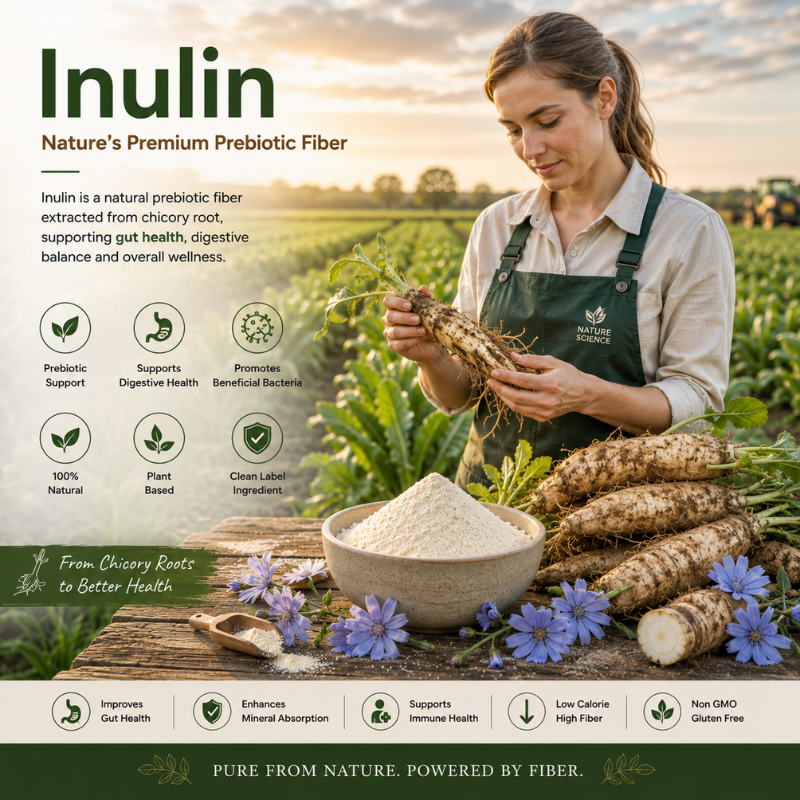
Inulin is a naturally occurring soluble dietary fiber obtained primarily from chicory root and other plants. Applications include protein powders, functional beverages, dairy alternatives, nutrition bars, meal replacements, and dietary supplements. Its excellent solubility and neutral taste make it highly versatile.
View InulinFructooligosaccharides (FOS)
Short-chain prebiotic carbohydrates
FOS consists of short-chain carbohydrates that are widely used as prebiotic ingredients. Applications include functional beverages, powder supplements, dairy alternatives, nutritional foods, and sports nutrition. FOS is valued for its high water solubility and compatibility with numerous food systems.
View FOSOther functional fibers
Some dietary fibers are widely used because of their functional properties, although not all are classified as prebiotics under current scientific definitions.
Resistant Dextrin
Common applications include clear beverages, functional drinks, meal replacements, and nutritional supplements. It offers high solubility, neutral flavor, and low viscosity.
Polydextrose
Used in nutrition bars, functional foods, reduced-sugar products, and beverage formulations. It contributes dietary fiber and supports formulation flexibility in many food applications.
Natural food sources of prebiotics
Several plant foods naturally contain prebiotic compounds. The concentration of naturally occurring prebiotic compounds varies depending on the food and its preparation.
Vegetables
Chicory root, garlic, onion, leeks, asparagus, and Jerusalem artichokes.
Fruits
Bananas and apples.
Whole grains
Wheat, barley, and oats.
Legumes
Lentils, chickpeas, and beans.
Applications in food manufacturing
Prebiotic ingredients are widely used across functional beverages, sports nutrition, dairy alternatives, nutrition bars, dietary supplements, and functional foods.
- Functional Beverages
- Sports Nutrition
- Dairy Alternatives
- Nutrition Bars
- Dietary Supplements
- Functional Foods
Applications by product category
Functional beverages
High-fiber beverages, nutritional drinks, plant-based beverages, and meal replacement beverages.
Sports nutrition
Protein powders, recovery products, performance nutrition, and nutritional beverages.
Dairy alternatives
Plant-based milk, yogurt alternatives, dairy-free beverages, and nutritional drinks.
Nutrition bars
Protein bars, snack bars, functional bars, and meal replacement bars.
Dietary supplements
Powder formulations, capsules, sachets, and functional ingredient blends.
Functional foods
Breakfast cereals, instant mixes, nutritional snacks, and fortified foods.
Functional benefits in food formulation
In addition to their nutritional role, prebiotic fibers provide useful technological properties.
Depending on the ingredient, they may contribute good water solubility, improved mouthfeel, texture enhancement, bulking properties, stable processing performance, neutral flavor profile, and excellent compatibility with protein ingredients. These characteristics make them valuable components in modern product development.
Choosing the right prebiotic ingredient
Manufacturers evaluate several factors when selecting prebiotic ingredients.
Product type
Whether the formulation is a beverage, powder, bakery product, dairy alternative, or supplement.
Solubility requirements
Highly soluble ingredients are preferred for beverages and nutritional powders.
Processing conditions
Ingredients should remain suitable under manufacturing conditions such as mixing, heating, pasteurization, drying, and storage.
Formulation objectives
Selection depends on target fiber content, desired texture, ingredient compatibility, product positioning, and nutritional profile.
Why Aspire Biozymes?
Aspire Biozymes supplies premium soluble dietary fibers suitable for food, beverage, nutrition, and dietary supplement applications.
Our portfolio includes inulin, fructooligosaccharides (FOS), resistant dextrin, polydextrose, protein + fiber blends, and customized ingredient solutions. We support manufacturers with ingredient selection, technical guidance, formulation assistance, documentation, and commercial supply.
Related guides & products

Gut Health
Read the guide
What Is Dietary Fiber?
Read the guide
Protein + Fiber Blends
Explore solutionsScientific summary
Prebiotics are non-digestible substrates that are selectively utilized by certain beneficial microorganisms in the large intestine.
Commercial prebiotic ingredients such as inulin and fructooligosaccharides (FOS) are widely incorporated into food, beverage, and nutrition products because of their nutritional significance and functional properties.
In addition to supporting product innovation, these soluble fibers offer excellent formulation versatility, including good solubility, neutral flavor, and compatibility with plant proteins and other functional ingredients.
Frequently asked questions
Prebiotics are non-digestible food components that are selectively utilized by certain beneficial microorganisms in the large intestine.
No. Prebiotics are dietary substrates that nourish certain microorganisms, while probiotics are live microorganisms themselves.
Aspire Biozymes supplies inulin and fructooligosaccharides (FOS), along with other soluble dietary fibers such as resistant dextrin and polydextrose for food and nutrition applications.
Foods such as chicory root, garlic, onions, leeks, asparagus, bananas, oats, barley, and legumes naturally contain prebiotic compounds.
Prebiotic ingredients are used to increase dietary fiber content and provide formulation benefits such as improved solubility, texture, mouthfeel, and compatibility with functional food and beverage products.
Ready to explore prebiotic ingredients?
Discover inulin, FOS, and protein + fiber blends from Aspire Biozymes.