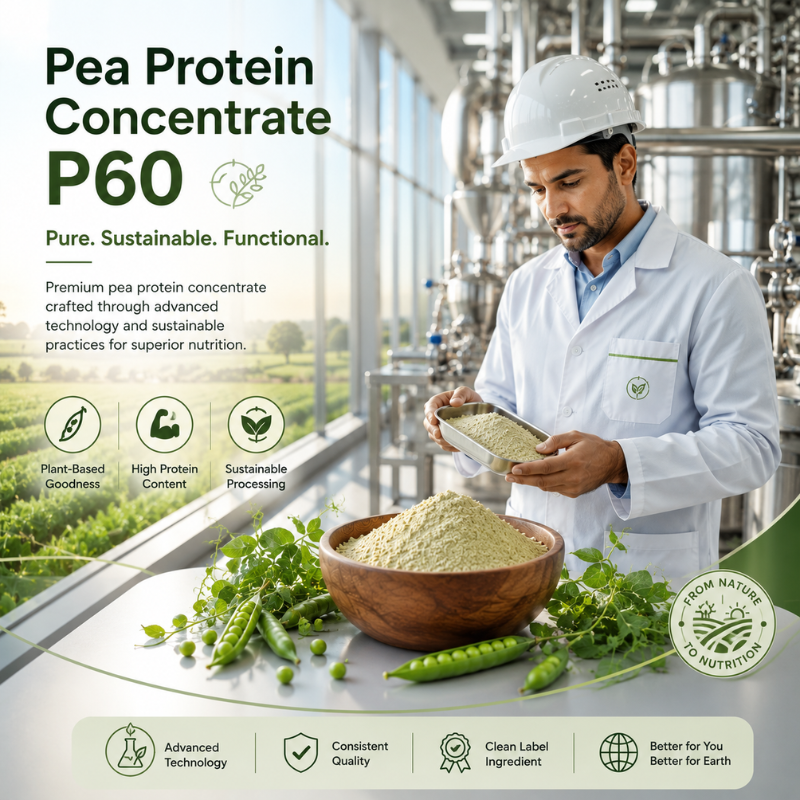
Pea Protein Concentrate
Produced from yellow peas (Pisum sativum). Used in bakery products, breakfast cereals, snack foods, nutrition bars, and plant-based foods.
Explore P60A comprehensive guide to protein concentrate production, types, functional properties, and applications — with a focus on plant-based pea protein concentrate.
Protein concentrate is a food ingredient produced by increasing the proportion of protein in a raw material while retaining some naturally occurring carbohydrates, dietary fiber, fats, and minerals. Compared with whole grains or legumes, protein concentrates provide a higher protein content and are widely used in food manufacturing to enhance the nutritional profile and functional performance of finished products.
Commercial protein concentrates are available from both plant and animal sources. Plant protein concentrates are commonly manufactured from peas, soybeans, rice, oats, and other legumes or cereals. Aspire Biozymes primarily offers Pea Protein Concentrate (P60) as part of its plant protein portfolio.
Protein concentrates are used in bakery products, beverages, snacks, cereals, meat alternatives, nutrition bars, dairy alternatives, and functional foods because they combine nutritional value with useful processing characteristics.
Protein concentrate is produced by partially removing non-protein components from a protein-containing raw material while retaining a significant proportion of the natural nutrients.
Compared with protein isolates, concentrates generally contain moderate to high protein content, more dietary fiber, more naturally occurring carbohydrates, slightly higher fat content, and less extensive processing. These characteristics make protein concentrates suitable for applications where balanced nutrition and functional performance are desired.
Commercial protein concentrates are produced from several plant sources. Aspire Biozymes supplies pea protein concentrate for bakery, cereals, snacks, and functional food applications.
Produced from yellow peas (Pisum sativum). Used in bakery products, breakfast cereals, snack foods, nutrition bars, and plant-based foods.
Explore P60Produced from soybeans (Glycine max). Frequently used in processed foods, meat products, bakery products, dairy alternatives, and functional foods.
Rice and oat protein concentrates are used in selected nutritional and specialty food applications. Additional concentrates may be produced from chickpeas, lentils, faba beans, canola, and sunflower. Availability depends on regional production and commercial demand.
Although both are concentrated protein ingredients, they differ in processing intensity and composition. Manufacturers select the appropriate ingredient based on formulation objectives and product requirements.
| Feature | Protein Concentrate | Protein Isolate |
|---|---|---|
| Degree of processing | Moderate | Higher |
| Protein content | Moderate to high | Higher |
| Dietary fiber | Higher | Lower |
| Carbohydrates | Higher | Lower |
| Fat | Slightly higher | Lower |
| Functional performance | Good | Highly specialized |
Compare our plant protein grades: Pea Protein Concentrate (P60), Pea Protein Isolate (P85), and Soy Protein Isolate (SPI 90) — or read What is Protein Isolate? and the full Protein Comparison Guide.
Manufacturing Process
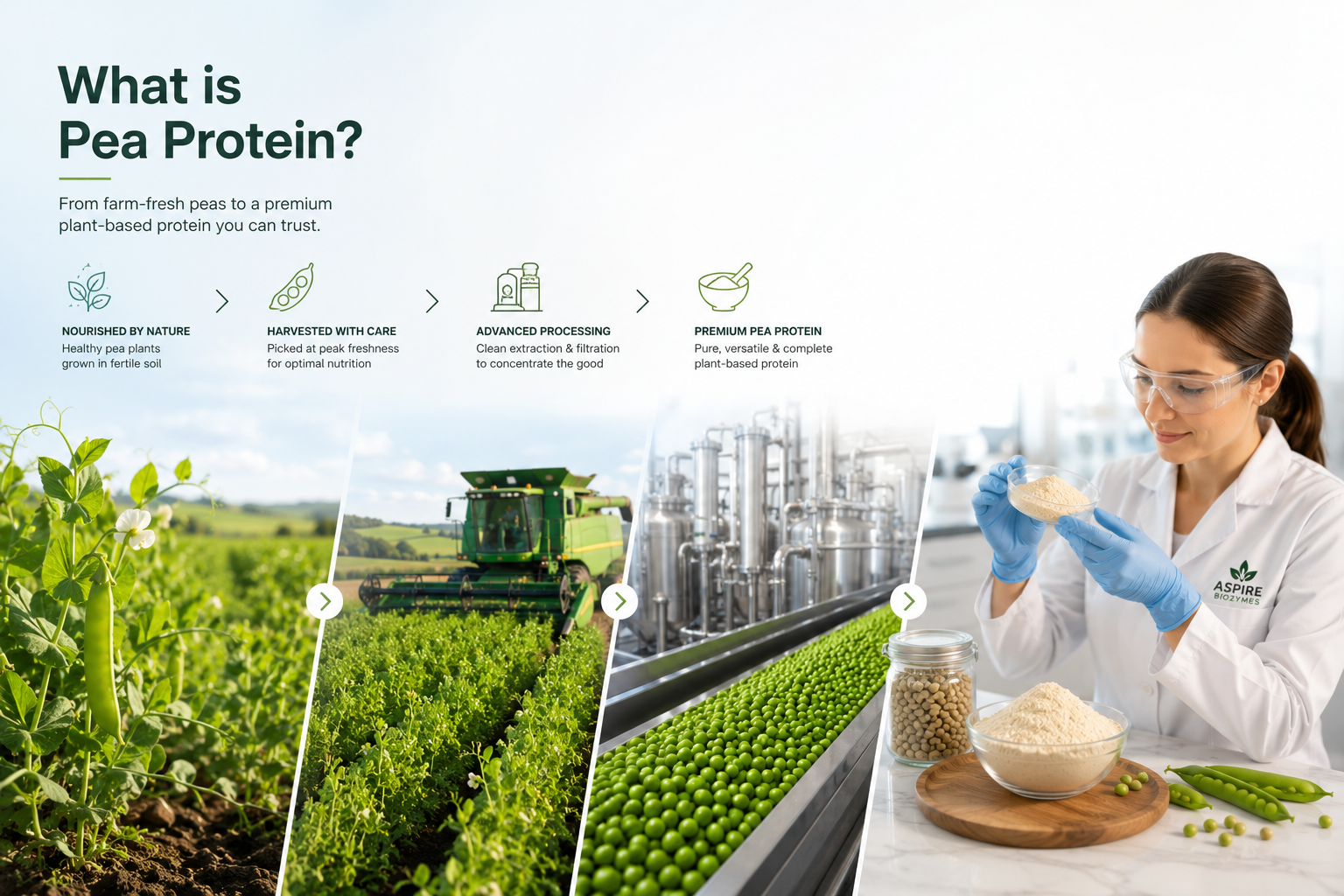
The production of protein concentrates typically includes several controlled processing stages to concentrate the protein fraction while retaining useful nutritional components.
The nutritional composition of protein concentrates depends on the source material and manufacturing process. The exact composition varies among different protein concentrate products.
Protein concentrates provide several technological benefits during food processing that influence product quality and manufacturing performance.
Absorb water and contribute to moisture retention in many food products.
Help stabilize mixtures of oil and water in suitable food formulations.
Contribute to the structure and texture of bakery products, snacks, and processed foods.
Assist in binding ingredients in nutrition bars, meat alternatives, and prepared foods.
Performance depends on protein source, formulation, processing conditions, and pH.
Protein concentrates are used in a wide range of food categories across bakery, cereals, snacks, plant-based foods, and beverages.
Granola, breakfast cereals, cereal bars, and extruded cereal products.
Explore functional foodsProtein snacks, extruded snacks, baked snacks, and savory products.
Meat alternatives, plant-based prepared foods, and protein-rich foods.
Explore plant-based foodsProtein bars, meal replacement bars, and functional snack bars.
Explore sports nutritionSelected grades may be incorporated into nutritional beverages depending on formulation requirements.
Explore beveragesProtein concentrates offer several practical advantages for food manufacturers seeking balanced nutrition and versatile processing performance.
Commercial protein concentrates are commonly evaluated against defined specifications. Product specifications vary depending on the source material and intended application.
Protein concentrates should generally be stored in a cool, dry environment, in tightly sealed packaging, protected from moisture and direct sunlight, according to manufacturer storage recommendations.
Protein concentrate ingredients should comply with applicable regulations governing food ingredient standards, food safety, Good Manufacturing Practices (GMP), ingredient labeling, allergen declaration where applicable, and contaminant limits. Manufacturers should ensure compliance with the regulatory requirements of their target markets.
Protein concentrate is produced by partially removing non-protein components from protein-rich raw materials, resulting in an ingredient with a higher protein concentration while retaining more naturally occurring carbohydrates and dietary fiber than a protein isolate.
Commercial protein concentrates are available from peas, soybeans, rice, oats, and other plant sources. They are widely used in bakery products, snacks, cereals, nutrition bars, plant-based foods, beverages, and functional foods.
They provide nutritional enrichment together with functional properties such as water absorption, emulsification, texture development, and ingredient binding.
A protein concentrate is a food ingredient produced by increasing the protein content of a raw material while retaining some naturally occurring carbohydrates, dietary fiber, fat, and minerals.
Protein concentrates undergo less purification than protein isolates and generally contain more dietary fiber and carbohydrates but a lower protein concentration. Read What is Protein Isolate? for a full comparison.
Common examples include pea protein concentrate, soy protein concentrate, rice protein concentrate, and oat protein concentrate.
Protein concentrates are used in bakery products, breakfast cereals, snacks, nutrition bars, plant-based foods, beverages, and functional food formulations.
They are typically produced through raw material preparation, milling, protein concentration using physical or aqueous processing methods, and drying to produce a stable powder suitable for food manufacturing.
Explore P60 and compare plant protein grades from Aspire Biozymes.