Meat Processing
Controlled protein modification in meat tenderization processes.
Explore food processingA comprehensive guide to bromelain — its pineapple source, production methods, enzymatic properties, and applications in meat processing, protein ingredients, bakery, and beverage manufacturing.
Bromelain is a group of proteolytic (protein-digesting) enzymes naturally found in pineapple (Ananas comosus). It is extracted primarily from the pineapple stem and fruit and is widely used in food processing because of its ability to hydrolyze proteins into smaller peptides and amino acids.
Commercial bromelain preparations are manufactured under controlled conditions to provide standardized enzyme activity for industrial applications. Because bromelain functions under relatively mild processing conditions, it is used in protein processing, meat tenderization, beverage clarification, bakery, nutritional ingredient manufacturing, and specialized food formulations.
Aspire Biozymes supplies food-grade Bromelain for industrial food applications.
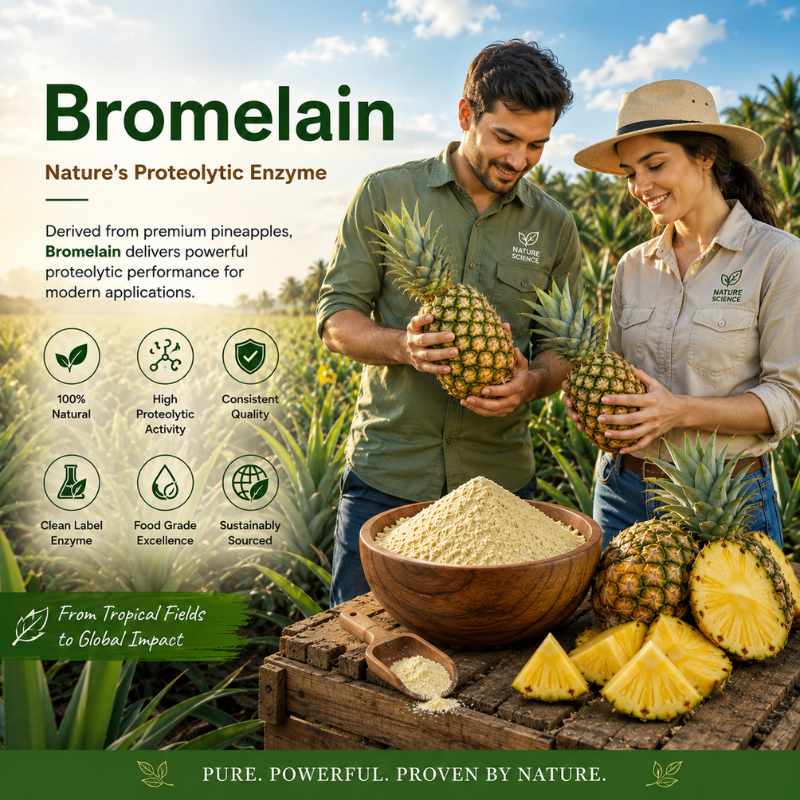
Bromelain is not a single enzyme but a mixture of proteolytic enzymes together with naturally occurring phosphatases, glucosidases, peroxidases, cellulases, glycoproteins, and other constituents present in pineapple extracts.
The protease fraction is responsible for the protein-hydrolyzing activity used in food processing. Bromelain belongs to the cysteine protease family, meaning its catalytic mechanism depends on a cysteine residue at the enzyme's active site. Read also: What is Protease?
Commercial bromelain is obtained from pineapple (Ananas comosus). The enzyme is naturally present in the pineapple stem, fruit, and leaves (at lower concentrations).
Industrial production primarily uses the stem, which generally provides higher enzyme yields than the edible fruit and allows utilization of agricultural by-products.
Mechanism
Bromelain hydrolyzes peptide bonds in protein molecules.
Because bromelain is a catalyst, it is not consumed during the reaction.
Production
Commercial bromelain production generally includes several controlled stages to produce standardized enzyme activity.
Several processing conditions influence bromelain performance. Proper control helps achieve the desired processing outcome.
Bromelain has an optimal temperature range. Excessive heat can reduce activity by denaturing the protein structure.
Functions over a relatively broad pH range, although activity varies depending on processing conditions and substrate.
The extent of protein hydrolysis increases with reaction time until the desired level is achieved.
Increasing enzyme concentration generally increases the rate of protein hydrolysis when sufficient substrate is available.
Different protein sources vary in susceptibility to bromelain due to differences in protein structure and composition.
Bromelain contributes several useful functions during food processing.
Primary function is the controlled breakdown of proteins into smaller peptides.
Controlled proteolysis may modify the texture of selected protein-containing foods.
Used in specialized protein ingredients where controlled protein modification is required.
Appropriate use may improve efficiency in specific food manufacturing processes.
Bromelain is used across a variety of food manufacturing sectors.
Controlled protein modification in meat tenderization processes.
Explore food processing
Hydrolyzed protein production, protein ingredient processing, and functional protein systems.
Explore enzyme-fortified proteinsProtein hydrolysates, nutritional powders, and functional ingredient manufacturing.
Explore dietary supplementsSelected bakery ingredient systems where controlled protein modification is beneficial.
Explore bakerySelected applications involving protein-containing ingredients.
Explore beveragesVarious specialty food manufacturing processes depending on formulation and processing requirements.
Commercial bromelain offers several advantages in food processing. The specific benefits depend on the processing conditions and product formulation.
Commercial bromelain preparations are commonly evaluated against defined specifications. Activity is measured using validated analytical methods appropriate for the product specification.
Bromelain should generally be stored in a cool, dry environment, in sealed containers, protected from moisture and direct sunlight, according to the manufacturer's storage recommendations.
Bromelain used in food processing should comply with applicable regulations relating to food enzyme standards, food safety requirements, Good Manufacturing Practices (GMP), processing aid regulations where applicable, ingredient labeling, and country-specific regulatory requirements.
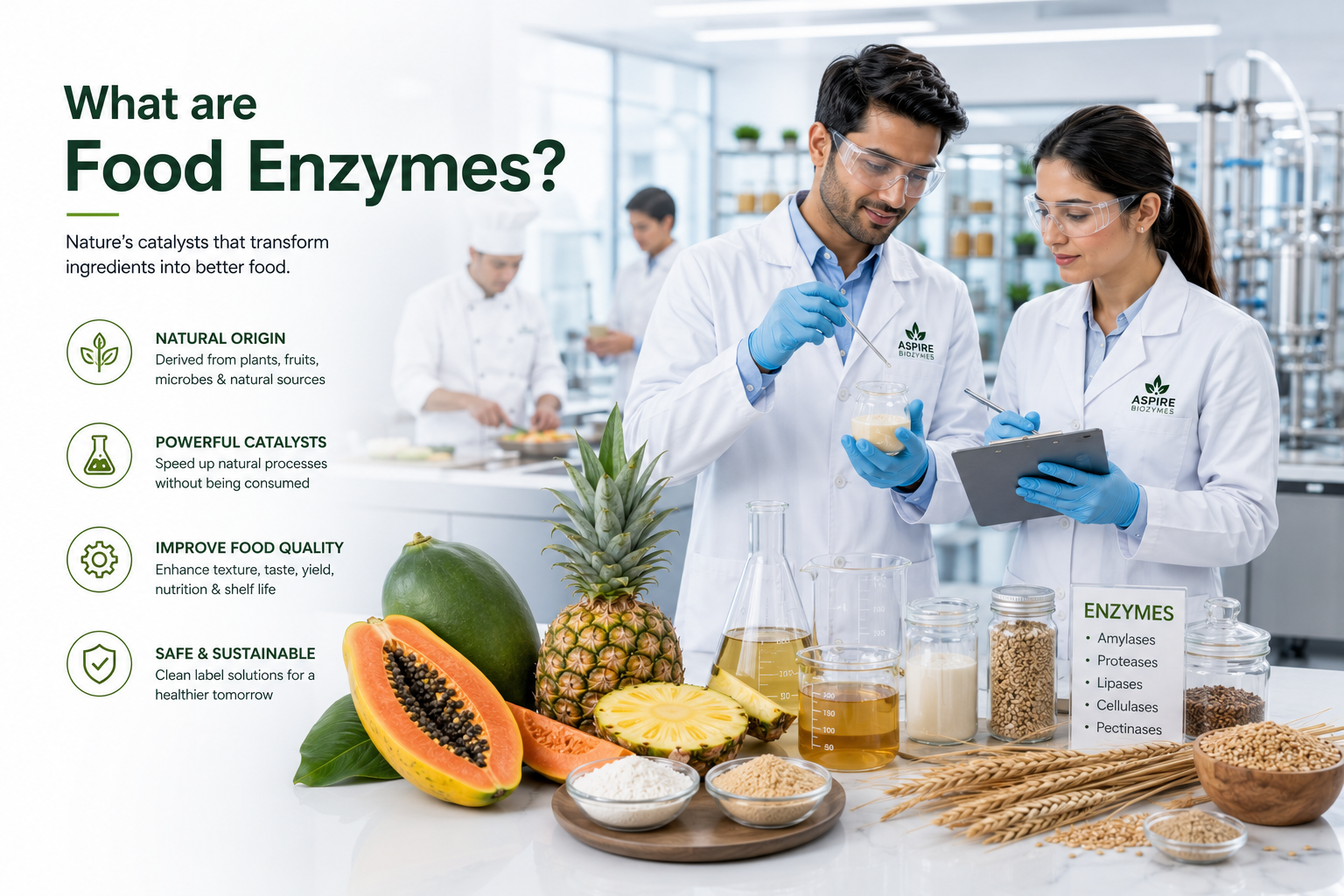
Bromelain is a group of cysteine proteases naturally obtained from pineapple (Ananas comosus), particularly the stem. Commercial bromelain is produced through extraction, purification, and drying processes to provide standardized enzyme activity for food manufacturing.
It catalyzes the hydrolysis of proteins into smaller peptides and amino acids and is widely used in meat processing, protein ingredient manufacturing, nutritional ingredients, bakery, beverage processing, and other food applications.
Its activity is influenced by temperature, pH, enzyme concentration, substrate characteristics, and processing time.
Bromelain is a mixture of proteolytic enzymes naturally found in pineapple (Ananas comosus) that hydrolyze proteins into smaller peptides and amino acids.
Commercial bromelain is primarily extracted from pineapple stems, although it is also present in the fruit and other plant tissues.
Bromelain is used in meat tenderization, protein hydrolysis, nutritional ingredient manufacturing, bakery, beverage processing, and specialty food applications.
The manufacturing process generally includes extraction from pineapple, filtration, purification, and drying to produce a stable enzyme preparation.
Bromelain activity is influenced by temperature, pH, enzyme concentration, substrate characteristics, and processing time. Proper control of these factors helps achieve the desired processing outcome.
Explore food-grade Bromelain and related enzyme solutions from Aspire Biozymes.