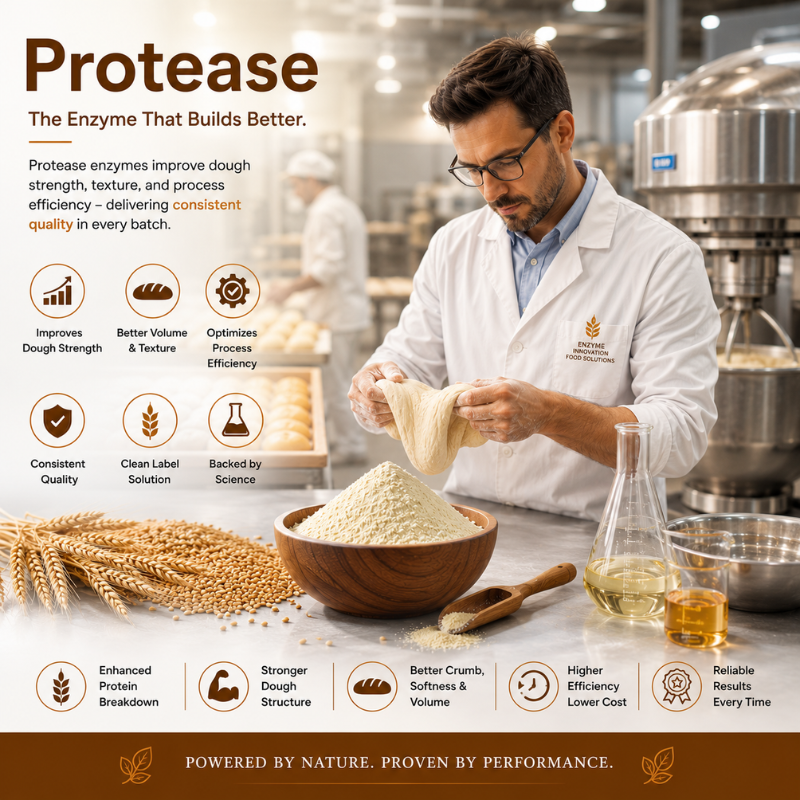
Protease
Breaks peptide bonds within proteins. Used in protein hydrolysis, dairy processing, nutritional ingredient manufacturing, meat processing, and bakery processing.
Explore ProteaseA comprehensive guide to food enzyme types, functions, production methods, and applications across bakery, dairy, beverages, protein processing, and nutritional ingredient manufacturing.
Food enzymes are proteins that act as biological catalysts, accelerating specific biochemical reactions during food processing. They enable reactions to occur more efficiently under controlled processing conditions without being consumed in the reaction itself.
The food industry uses enzymes to improve manufacturing efficiency, product consistency, processing performance, and ingredient functionality. Because enzymes are highly specific, each enzyme acts on particular substrates and performs a defined biochemical function.
Food enzymes are used across numerous sectors, including bakery, dairy, beverages, fruit processing, confectionery, protein processing, brewing, starch processing, and nutritional ingredient manufacturing.
Aspire Biozymes supplies food-grade enzymes including Papain, Bromelain, Protease, Alpha Amylase, and Lipase for various food processing applications.
An enzyme is a protein that catalyzes a specific chemical reaction by lowering the activation energy required for that reaction.
Unlike chemical catalysts, enzymes are highly selective. Each enzyme acts only on particular molecules known as substrates. For example, proteases act on proteins, amylases act on starch, and lipases act on fats and oils. This specificity allows manufacturers to target particular processing objectives without affecting unrelated food components.
Mechanism
Food enzymes bind to specific substrate molecules and convert them into different products through biochemical reactions.
Because enzymes are not consumed during the reaction, relatively small amounts can process large quantities of food materials under appropriate conditions.
Commercial food enzymes may be obtained from plant, microbial, or animal sources depending on the enzyme type and intended application.
Examples include papaya (Carica papaya) and pineapple (Ananas comosus). Plant-derived enzymes include Papain and Bromelain.
Many commercial food enzymes are produced through controlled fermentation using microorganisms such as Aspergillus, Bacillus, and Trichoderma.
Some food enzymes are traditionally obtained from animal tissues. Their use depends on product requirements, regulations, and intended markets.
Food enzymes are classified according to the reactions they catalyze. Aspire Biozymes supplies food-grade enzymes for industrial food applications.
Breaks peptide bonds within proteins. Used in protein hydrolysis, dairy processing, nutritional ingredient manufacturing, meat processing, and bakery processing.
Explore Protease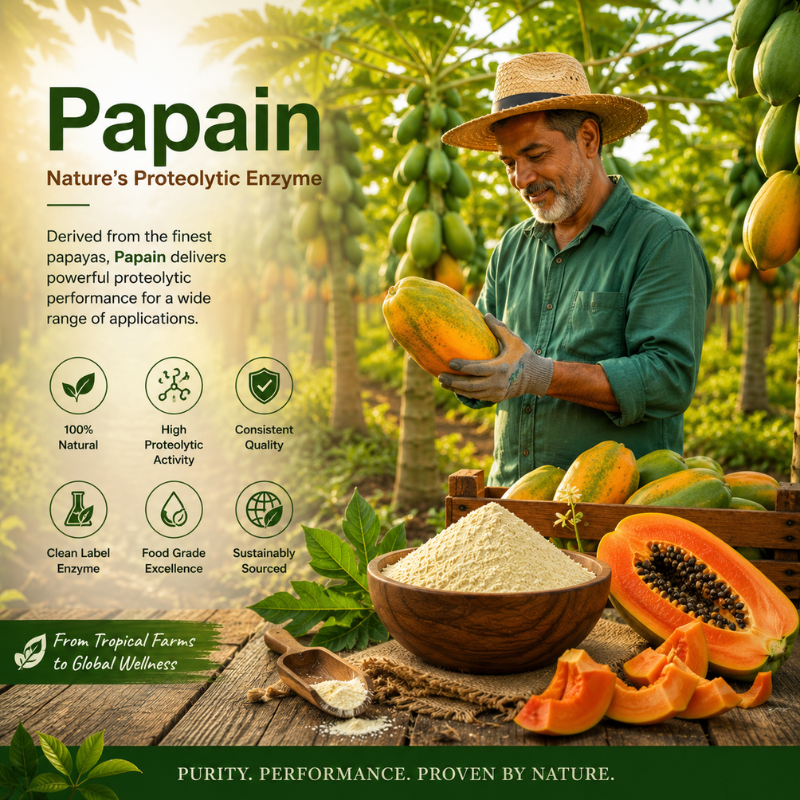
Proteolytic enzyme extracted from papaya latex. Used in protein processing, meat tenderization, nutritional ingredients, and food manufacturing.
Explore Papain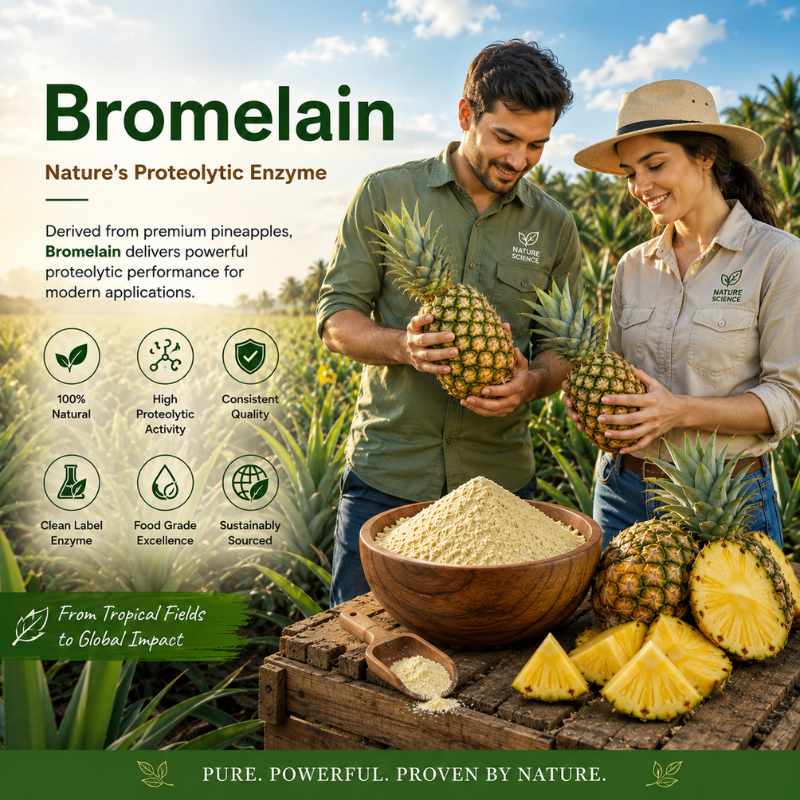
Obtained from pineapple. Used in protein processing, meat processing, nutritional ingredient production, and food manufacturing.
Explore Bromelain
Hydrolyzes starch into smaller carbohydrates. Used in bakery, brewing, starch processing, beverage manufacturing, and processed foods.
Explore Alpha Amylase
Catalyzes the breakdown of fats and oils. Used in dairy processing, cheese production, bakery, flavor development, and specialty food manufacturing.
Explore LipaseThe effectiveness of food enzymes depends on several processing conditions. Optimizing these factors helps achieve the desired processing outcome.
Each enzyme functions efficiently within a particular temperature range. Excessive heat may reduce or eliminate enzyme activity through denaturation.
Enzyme activity varies according to the acidity or alkalinity of the processing environment. Each enzyme has an optimal pH range.
Reaction time influences the extent of substrate conversion. Manufacturers optimize processing time based on product requirements.
The amount of enzyme added affects reaction rate under suitable processing conditions.
Enzyme activity depends on the presence of sufficient substrate molecules for the enzyme to act upon.
Food enzymes are widely used throughout the food industry to improve processing efficiency and product performance.
Dough conditioning, starch modification, texture improvement, and baking process optimization.
Explore bakeryCheese production, protein processing, flavor development, and dairy ingredient manufacturing.
Explore dairyFruit juice processing, brewing, nutritional beverages, and ingredient processing.
Explore beverages
Production of specialized protein ingredients and hydrolyzed proteins.
Explore enzyme-fortified proteins
Proteolytic enzymes used in selected meat processing applications according to manufacturing requirements.
Explore food processingEnzymes incorporated into selected nutritional ingredient manufacturing processes.
Explore dietary supplementsFood enzymes provide several benefits during food manufacturing. The benefits obtained depend on the enzyme selected and the processing conditions used.
Commercial food enzymes are commonly evaluated against defined specifications. Testing methods depend on the enzyme type and intended application.
Food enzymes should generally be stored in a cool, dry environment, in sealed containers, protected from moisture and direct sunlight, according to the manufacturer's storage recommendations.
Food enzymes are regulated in many countries based on their source, manufacturing process, intended use, and safety evaluation. Manufacturers should ensure compliance with food safety regulations, Good Manufacturing Practices (GMP), ingredient labeling requirements, food additive or processing aid regulations where applicable, and country-specific approval requirements.
Food enzymes are proteins that catalyze specific biochemical reactions during food manufacturing. They are obtained from plant, microbial, or animal sources and are used to improve processing efficiency, ingredient functionality, and product consistency.
Commercial food enzymes such as Protease, Papain, Bromelain, Alpha Amylase, and Lipase are widely applied in bakery, dairy, beverages, protein processing, meat processing, starch processing, and nutritional ingredient manufacturing.
Their activity depends on factors including temperature, pH, substrate availability, and processing conditions.
A food enzyme is a protein that acts as a biological catalyst, accelerating specific biochemical reactions during food processing without being consumed in the reaction.
Common food enzymes include Protease, Papain, Bromelain, Alpha Amylase, and Lipase. Each acts on a specific type of substrate.
Food enzymes are used in bakery, dairy, beverages, brewing, starch processing, meat processing, protein ingredient manufacturing, and nutritional food production.
Commercial food enzymes may be obtained from plant sources, microbial fermentation, or animal sources, depending on the enzyme and intended application.
Enzyme activity is influenced by temperature, pH, enzyme concentration, substrate availability, and processing time. Optimizing these factors helps achieve the desired processing outcome.
Explore Papain, Bromelain, Protease, Alpha Amylase, and Lipase from Aspire Biozymes.