Protein Supplements
Protein powders, digestive enzyme blends, meal replacements, and nutritional supplements with proteolytic activity.
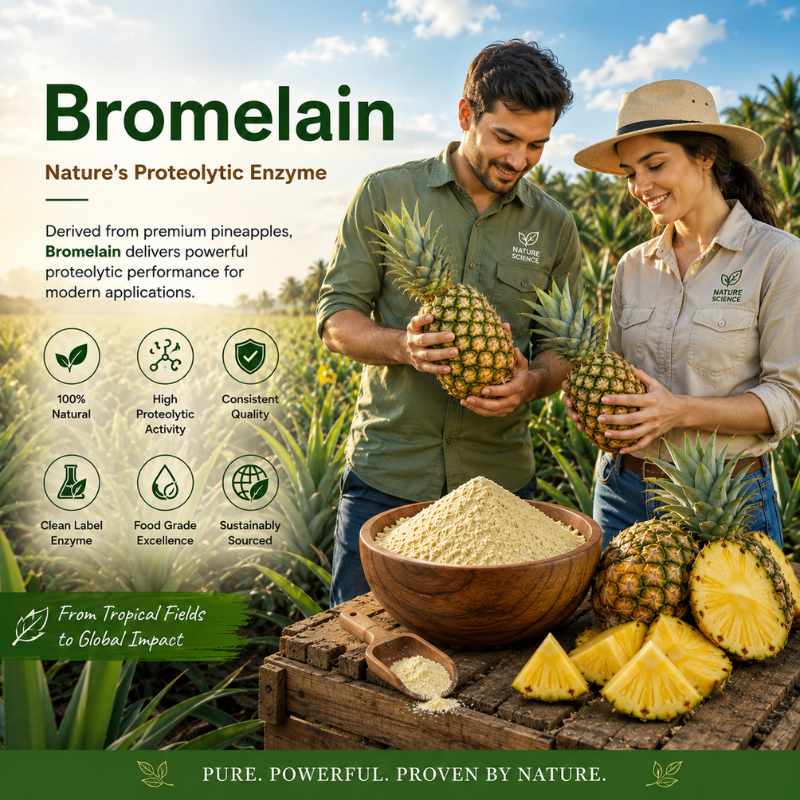
Explore supplementsA proteolytic enzyme complex from the pineapple plant (Ananas comosus) — widely used in protein supplements, digestive enzyme blends, meat tenderization, brewing, and industrial protein modification.
Bromelain is a mixture of protein-digesting enzymes naturally found in the pineapple plant, primarily extracted from the stem. With broad proteolytic activity, it hydrolyzes peptide bonds within proteins — making it valuable across food, nutraceutical, dietary supplement, pharmaceutical, cosmetic, and biotechnology applications.
Bromelain is not a single enzyme — it is a mixture of proteolytic enzymes capable of hydrolyzing proteins into smaller peptides and amino acids. Commercial preparations may also contain naturally occurring phosphatases, glucosidases, cellulases, glycoproteins, and enzyme inhibitors depending on the degree of purification.
Proteins consist of long chains of amino acids connected by peptide bonds. Bromelain binds to protein molecules, recognizes susceptible peptide bonds, and cleaves them through hydrolysis — producing smaller peptides available for further digestion into individual amino acids. Like papain, bromelain contains a cysteine residue in its catalytic site.
Commercial bromelain is primarily extracted from the pineapple stem (Ananas comosus, Bromeliaceae) — an agricultural by-product collected after fruit harvest. The stem contains higher enzyme concentrations than the fruit. Smaller quantities are also present in pineapple fruit and leaves.
Partner with the enzyme experts at Aspire Biozymes
Contact usScientific Overview
Bromelain is a plant-derived cysteine protease complex standardized according to enzyme activity. Its broad substrate specificity, process flexibility, and compatibility with vegetarian and vegan formulations have made it essential in protein supplements, digestive blends, meat tenderization, brewing, baking, and industrial protein processing worldwide.
Explore full specificationsExplore enzyme classification, manufacturing, functional properties, applications, and quality parameters for Bromelain.
Bromelain is a proteolytic enzyme complex naturally found in the pineapple plant (Ananas comosus). It consists of a group of protein-digesting enzymes together with naturally occurring phosphatases, glucosidases, cellulases, glycoproteins, and enzyme inhibitors. Commercial bromelain is primarily extracted from the pineapple stem.
Because of its ability to hydrolyze peptide bonds within proteins, bromelain is widely used in food, nutraceutical, dietary supplement, pharmaceutical, cosmetic, and biotechnology industries — commonly incorporated into digestive enzyme formulations, protein supplements, meat processing, brewing, and protein modification applications.
Within the pineapple plant, bromelain contributes to protein metabolism, plant defense mechanisms, protection against insects and microbial pathogens, and tissue repair following plant injury.
Commercial bromelain is supplied as fine powder, granules, or liquid enzyme preparations. Appearance ranges from pale cream to light brown depending on purity and processing.
Enzyme activity depends on temperature, pH, enzyme concentration, processing time, protein substrate, and moisture content. Food manufacturers optimize these variables according to the intended application.
Bromelain is a plant-derived proteolytic enzyme complex from pineapple stem. It hydrolyzes peptide bonds within proteins, producing smaller peptides and amino acids. Commercial bromelain is manufactured through controlled extraction, purification, drying, and activity standardization — with widespread use in protein supplements, digestive enzyme formulations, sports nutrition, meat tenderization, brewing, baking, dairy processing, and industrial protein modification.
Commercial bromelain production involves controlled extraction and purification from pineapple stems.
Appearance ranges from pale cream to light brown depending on purity and processing method.
Primary function is breakdown of proteins into smaller peptides and amino acids.
Bromelain acts on plant proteins, animal proteins, dairy proteins, legume proteins, and cereal proteins.
Widely used when controlled hydrolysis of proteins is required during food processing — enabling texture changes, tenderization, and clarity improvements.
Can be incorporated into both liquid and dry food systems depending on formulation requirements.
In digestive enzyme formulations, bromelain contributes to the normal breakdown of dietary proteins into peptides and amino acids. It functions as a food enzyme and does not replace the body's naturally produced digestive enzymes.
Protein powders, digestive enzyme blends, meal replacement products, and nutritional supplements — proteolytic activity complements normal digestion of dietary proteins.
Frequently included in sports nutrition products formulated with high levels of dietary protein.
Long used as a meat tenderizer. Bromelain hydrolyzes structural proteins within muscle tissue, reducing toughness under controlled conditions. Extent of tenderization depends on enzyme concentration, temperature, and treatment time.
Used to reduce haze-forming proteins and improve beer clarity and stability.
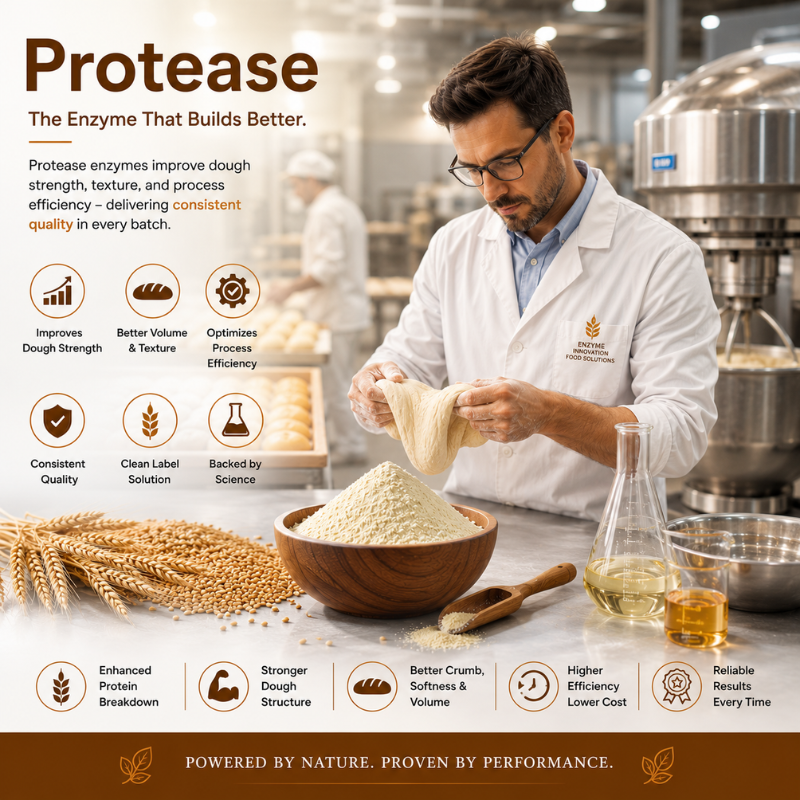
Selected bakery applications use bromelain to modify gluten proteins and influence dough characteristics under controlled processing conditions.
Controlled hydrolysis of milk proteins for specific product formulations.
Beyond food manufacturing, bromelain is used in:
Specific application depends on industry requirements and regulatory approvals.
Proper storage helps preserve enzyme activity throughout the product's shelf life.
Commercial bromelain is evaluated for enzyme activity, moisture content, particle size, appearance, microbiological quality, heavy metals, and food safety compliance. Enzyme activity is typically the primary specification for commercial standardization.
Bromelain is widely used as a food enzyme in numerous international markets. Manufacturers should comply with food enzyme regulations, food safety standards, ingredient labeling, microbiological specifications, contaminant limits, and Good Manufacturing Practices (GMP). Requirements vary by country and intended application.
Broad proteolytic activity and process flexibility make bromelain valuable across food, nutrition, and industrial applications.
Protein powders, digestive enzyme blends, meal replacements, and nutritional supplements with proteolytic activity.
Explore supplements
Controlled meat tenderization — hydrolyzing structural muscle proteins to reduce toughness.
Explore food applicationsBeer clarity improvement, gluten modification, and controlled protein hydrolysis in bakery processes.
Explore beveragesCysteine protease complex from Ananas comosus stem — a multi-enzyme mixture with broad protein hydrolysis capability.
Store in cool, dry conditions with sealed packaging. Protect from moisture, heat, and direct sunlight to maintain enzyme activity.
Commercial grades are standardized by enzyme activity — available as powder, granules, or liquid preparations for diverse formulations.

Bromelain is a mixture of proteolytic enzymes naturally obtained from the pineapple plant (Ananas comosus), primarily from the stem.
No. Bromelain is a complex mixture of proteolytic enzymes and naturally occurring associated components.
Most commercial bromelain is extracted from pineapple stems because they contain higher enzyme concentrations than the fruit.
Food processing, sports nutrition, digestive enzyme formulations, meat processing, brewing, baking, dairy processing, cosmetics, biotechnology, and laboratory research.
Yes. Bromelain is derived from pineapple, making it suitable for vegetarian and vegan formulations.
Request specifications, samples, or pricing from Aspire Biozymes.