Dairy Processing
Protein hydrolysis, dairy ingredient production, and specialized nutritional ingredients.
Explore dairyA comprehensive guide to protease enzymes — how they work, production methods, functional properties, and applications in dairy, bakery, meat processing, brewing, and nutritional ingredient manufacturing.
Proteases, also known as proteolytic enzymes or proteinases, are enzymes that catalyze the breakdown of proteins into smaller peptides and amino acids by hydrolyzing peptide bonds. They are among the most widely used enzymes in the food industry because proteins are major components of many food materials.
Proteases are naturally present in plants, animals, and microorganisms. Commercial food-grade proteases are produced under controlled manufacturing conditions to provide consistent enzyme activity and quality for industrial food processing.
Proteases are widely applied in protein hydrolysis, dairy processing, baking, meat processing, brewing, nutritional ingredient manufacturing, and specialty food production. Their specific applications depend on the enzyme source, activity profile, and processing conditions.
Aspire Biozymes supplies food-grade Protease for industrial food processing applications.
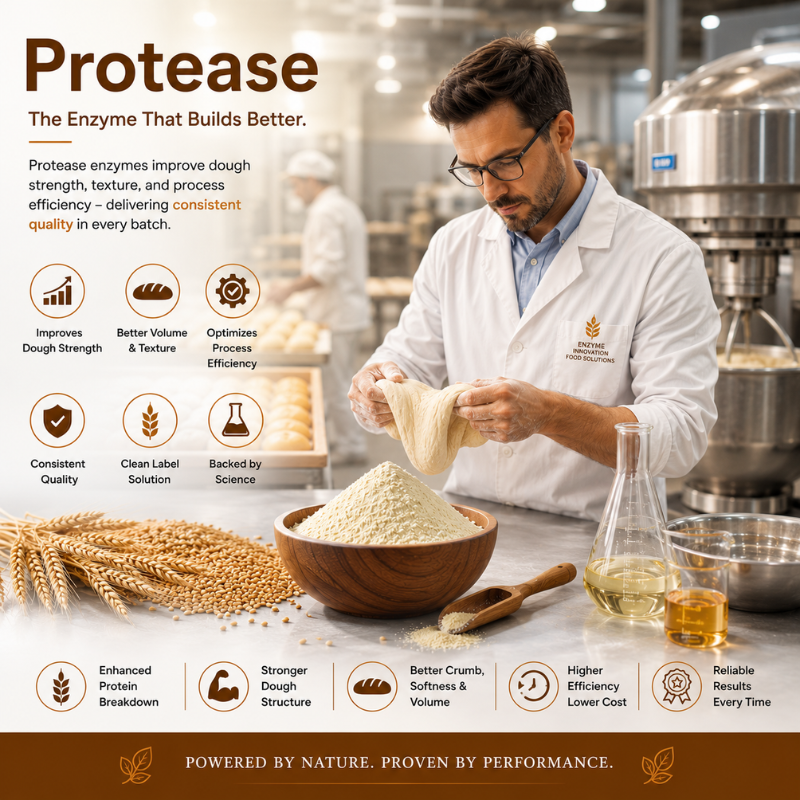
Protease is an enzyme that catalyzes the hydrolysis of peptide bonds connecting amino acids within protein molecules.
During hydrolysis, large protein molecules are broken into large peptides, small peptides, and individual amino acids. The degree of hydrolysis depends on the enzyme type, reaction conditions, processing time, and substrate characteristics.
Mechanism
Proteases function by recognizing specific peptide bonds within protein molecules.
Because enzymes are catalysts, they are not consumed during the reaction.
Commercial proteases are produced from microbial, plant, and animal sources depending on the enzyme type and intended application.
Most industrial food proteases are produced through controlled fermentation using Bacillus, Aspergillus, and Trichoderma species for consistent quality and scalable manufacturing.
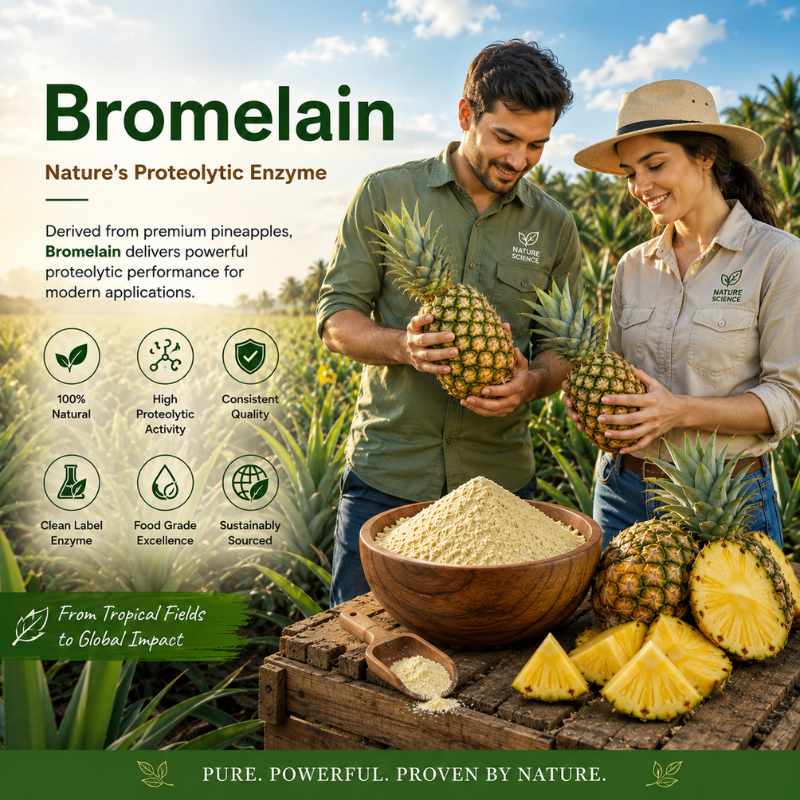
Examples include papaya (Carica papaya) — Papain, pineapple (Ananas comosus) — Bromelain, and fig (Ficus carica) — Ficin.
Examples include pepsin, trypsin, and chymotrypsin. Use depends on regulatory requirements, product type, and market preferences.
Proteases can be classified according to their catalytic mechanism or their optimal operating conditions.
Function best under acidic conditions and are commonly used in specific food processing applications.
Exhibit optimal activity near neutral pH and are suitable for various industrial processes.
Perform efficiently under alkaline conditions and are widely produced through microbial fermentation for industrial applications.
The performance of proteases depends on several processing variables that manufacturers optimize for desired outcomes.
Each protease has an optimum temperature range. Temperatures above the stability limit may reduce activity through denaturation.
Protease activity varies according to acidity or alkalinity. Each enzyme performs best within a specific pH range.
Increasing enzyme concentration generally increases reaction rate until available substrate becomes limiting.
Longer reaction times generally result in greater protein hydrolysis depending on desired product characteristics.
Protein source, structure, and concentration influence enzyme performance. Different proteins respond differently to protease treatment.
Proteases contribute to several processing functions in food manufacturing.
Break large proteins into smaller peptides. The extent of hydrolysis can be controlled through processing conditions.
Controlled proteolysis may modify the texture of selected food products.
Assist in improving process efficiency during specific food manufacturing operations.
Used in the manufacture of specialized protein ingredients and hydrolyzed protein products.
Proteases are used in numerous food processing sectors across dairy, bakery, meat, brewing, and nutritional ingredient manufacturing.
Protein hydrolysis, dairy ingredient production, and specialized nutritional ingredients.
Explore dairyDough systems to modify gluten properties and improve dough handling in selected bakery applications.
Explore bakery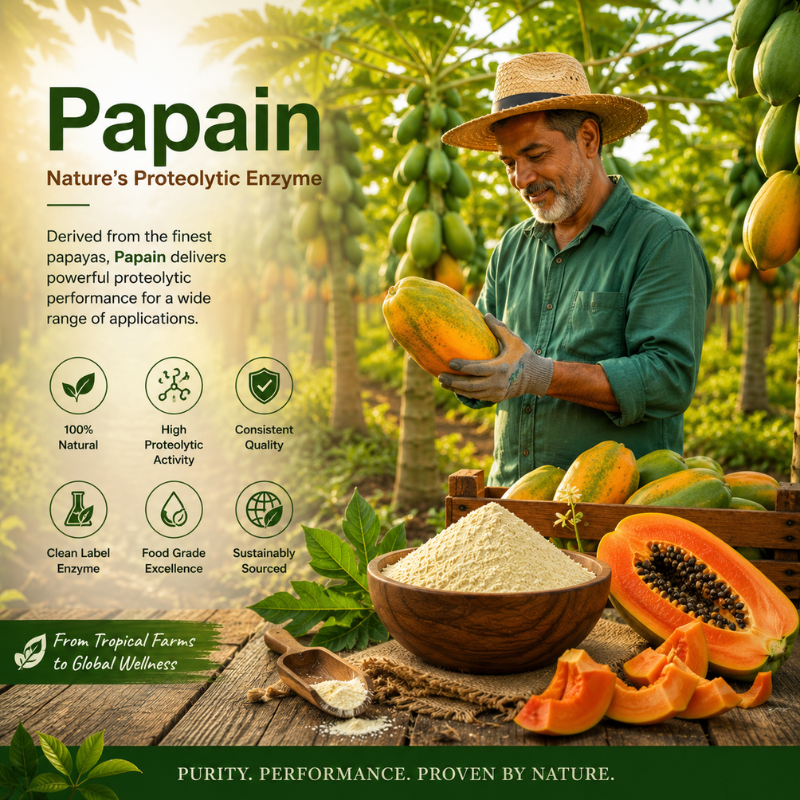
Selected applications where controlled protein modification is required.
Explore food processingModify protein content and support processing efficiency during selected brewing processes.
Explore beveragesHydrolyzed proteins, specialized protein ingredients, and nutritional formulations.
Explore dietary supplements
Production of functional food ingredients used across multiple food categories.
Explore enzyme-fortified proteinsCommercial food proteases provide several processing benefits. The benefits obtained depend on the processing conditions and intended application.
Commercial protease preparations are commonly evaluated against defined specifications. Activity is measured using validated analytical methods appropriate for the enzyme preparation.
Protease products should generally be stored in a cool, dry environment, in tightly sealed containers, protected from moisture and direct sunlight, according to the manufacturer's storage recommendations.
Protease enzymes used in food processing should comply with applicable regulations regarding food enzyme approvals, food safety standards, Good Manufacturing Practices (GMP), processing aid regulations where applicable, labeling requirements, and country-specific regulatory requirements.
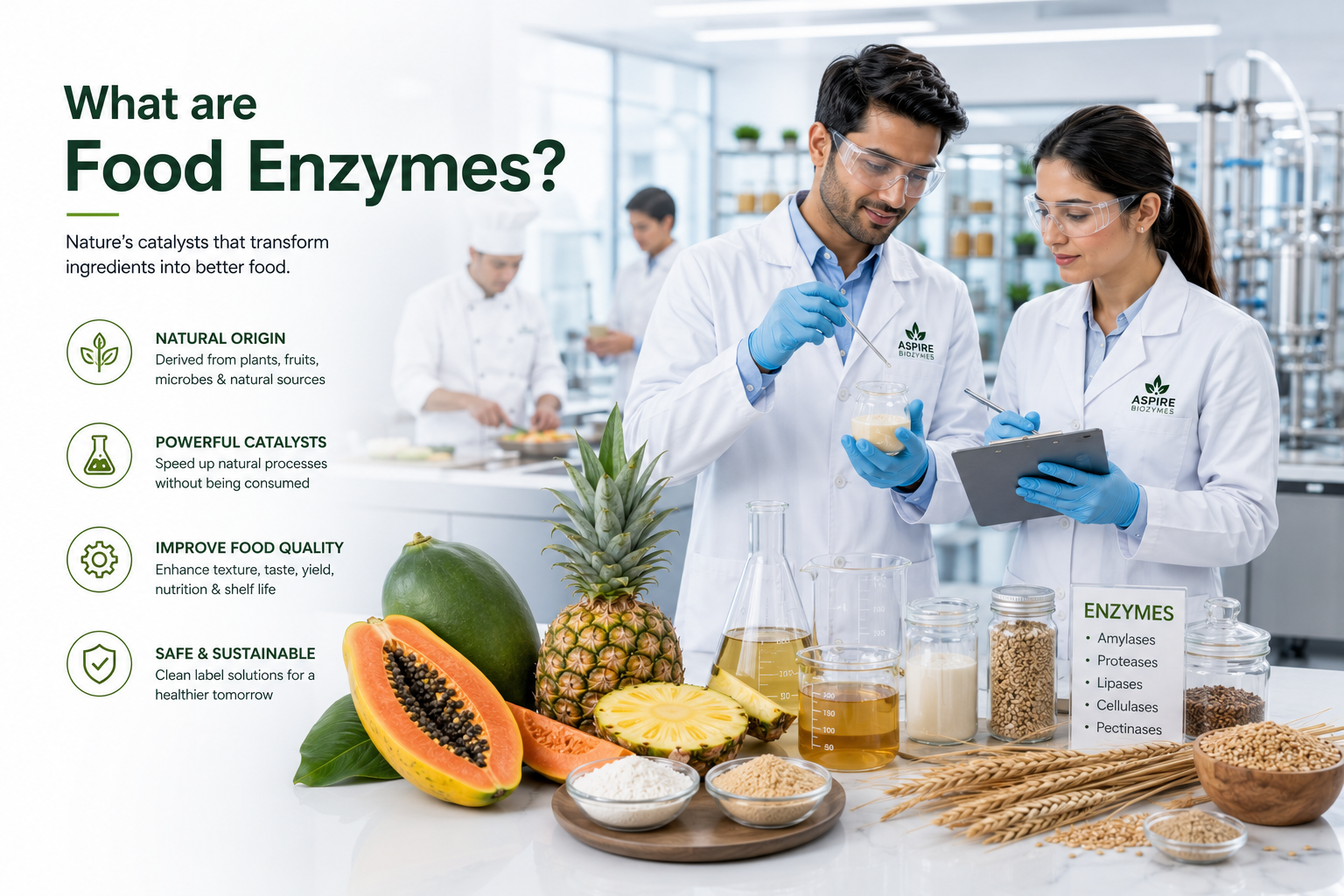
Proteases are enzymes that catalyze the hydrolysis of peptide bonds in proteins, producing smaller peptides and amino acids. Commercial food-grade proteases are obtained from microbial, plant, or animal sources.
They are used in dairy processing, bakery, meat processing, brewing, nutritional ingredient manufacturing, and functional food production. Their activity is influenced by temperature, pH, enzyme concentration, substrate characteristics, and processing time.
Controlled use of proteases supports efficient food manufacturing and the production of specialized protein ingredients.
A protease is an enzyme that breaks peptide bonds in proteins, converting them into smaller peptides and amino acids through hydrolysis.
Proteases are used in dairy processing, bakery, meat processing, brewing, protein hydrolysis, nutritional ingredient manufacturing, and functional food production.
Most commercial food-grade proteases are produced through controlled microbial fermentation, although some are derived from plant or animal sources.
Protease activity depends on temperature, pH, enzyme concentration, substrate characteristics, and processing time.
Explore food-grade Protease and related enzyme solutions from Aspire Biozymes.