Protein Supplements
Protein powders, meal replacements, and digestive enzyme blends with proteolytic activity.
Explore supplementsProteolytic enzymes that catalyze the hydrolysis of peptide bonds within proteins — among the most widely used industrial enzymes in food manufacturing, nutrition, dairy processing, animal feed, and biotechnology.
Proteases break peptide bonds in proteins, producing smaller peptides and free amino acids for digestion or food processing. Unlike papain and bromelain — specific plant-derived enzymes — protease is a broad term encompassing enzymes from microbial, plant, animal, and fungal sources. Commercial food-grade proteases are most commonly produced through controlled microbial fermentation.
Protease is the general name for enzymes that hydrolyze proteins — also called proteinase, peptidase, or proteolytic enzyme. Their primary function is converting large protein molecules into smaller peptides, oligopeptides, and individual amino acids through hydrolysis, where water molecules break peptide bonds.
Proteases recognize protein substrates, bind at the enzyme's active site, and cleave peptide bonds through hydrolysis — releasing smaller peptides that can be further broken down into amino acids. The resulting molecules are more accessible for absorption or further processing.
Commercial food-grade proteases are commonly produced through microbial fermentation using organisms such as Bacillus subtilis, Bacillus licheniformis, Aspergillus oryzae, and Aspergillus niger. Proteases also occur naturally in plants (papain, bromelain, ficin), animals (pepsin, trypsin, chymotrypsin), and fungi.
Partner with the enzyme experts at Aspire Biozymes
Contact usScientific Overview
Proteases are classified into serine, cysteine, aspartic, and metalloproteases according to their catalytic mechanisms. Standardized by enzyme activity, they are widely used in protein supplements, sports nutrition, dairy processing, brewing, baking, animal nutrition, and protein hydrolysate production — modifying protein functionality and supporting normal protein digestion.
Explore full specificationsExplore enzyme classification, sources, manufacturing, functional properties, applications, and quality parameters for Protease.
Proteases are enzymes that catalyze the hydrolysis of peptide bonds within proteins. They are among the most widely used industrial enzymes and play essential roles in food manufacturing, nutrition, biotechnology, pharmaceuticals, detergents, leather processing, and animal nutrition.
Proteins consumed in the diet are composed of long chains of amino acids connected by peptide bonds. Proteases break these bonds, producing smaller peptides and free amino acids that can be further utilized during digestion or food processing.
Protease performance depends on temperature, pH, enzyme concentration, processing time, and protein structure. Each protease has an optimal temperature and pH range; enzyme concentration and exposure time influence the degree of hydrolysis.
Proteases catalyze peptide bond hydrolysis, converting proteins into smaller peptides and amino acids. Commercial food-grade proteases are most commonly produced through microbial fermentation. Classified into serine, cysteine, aspartic, and metalloproteases, they are widely used in protein supplements, sports nutrition, dairy processing, brewing, baking, animal nutrition, and protein hydrolysate production.
Proteases are classified according to their catalytic mechanism.
Examples: trypsin, chymotrypsin. These enzymes contain a serine residue at the active site.
Examples: papain, bromelain, ficin. These enzymes use a cysteine residue during catalysis.
Example: pepsin. These enzymes function optimally in acidic environments.
These enzymes require metal ions, often zinc, for catalytic activity.
Commercial food-grade proteases are commonly produced through microbial fermentation.
Primary function is breaking proteins into smaller peptides and amino acids.
Controlled hydrolysis can modify solubility, texture, and functional performance of protein ingredients.
Compatible with liquid systems, powder formulations, fermentation processes, and continuous manufacturing.
Manufacturers use proteases to achieve specific functional properties during food processing — enabling tailored solubility, emulsification, and texture characteristics.
In digestive enzyme formulations, proteases provide proteolytic activity that complements the normal digestion of dietary proteins into peptides and amino acids.
Protein powders, meal replacements, nutritional supplements, and digestive enzyme formulations — proteolytic activity complements normal digestion of dietary proteins.
High-protein formulations frequently include protease enzymes as part of digestive enzyme blends.
Cheese production, protein hydrolysis, and specialized dairy ingredients. The specific enzyme selected depends on the intended process.
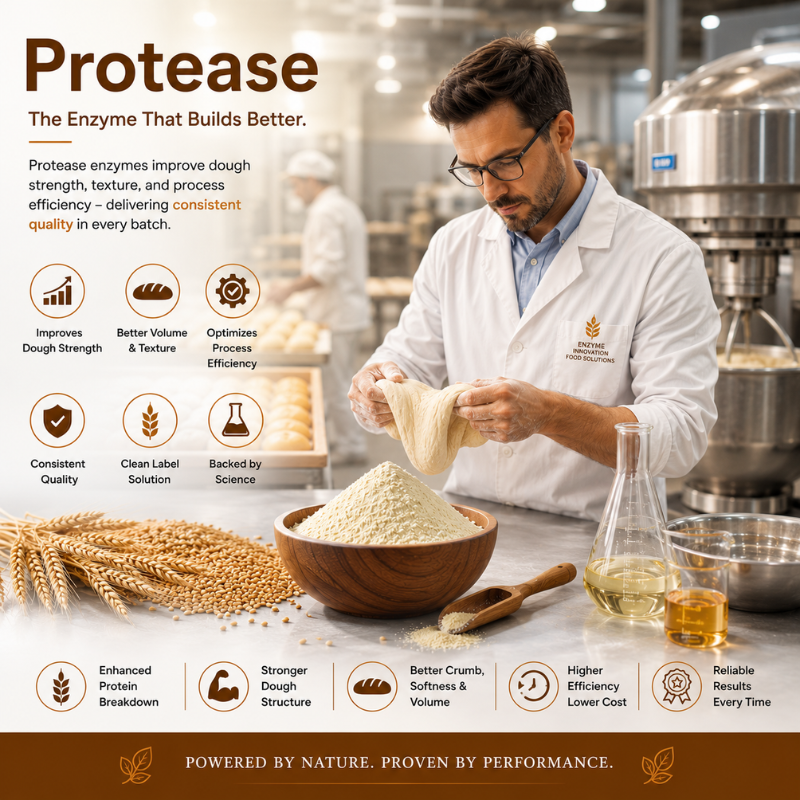
Controlled protease activity modifies gluten proteins to influence dough handling and processing characteristics.
Reduces haze-forming proteins and improves beverage stability.
Production of protein hydrolysates, bioactive peptide preparations, and specialized protein ingredients — with degree of hydrolysis carefully controlled to product specifications.
Proteases are widely used in commercial animal feeds:
Feed enzymes are selected according to nutritional requirements of each species and applicable regulatory guidelines.
Beyond food, proteases are used in biotechnology, pharmaceuticals, leather processing, textile processing, detergents, waste management, and laboratory research — with specific activity profiles depending on processing requirements.
Proper storage helps preserve enzyme activity throughout the product's shelf life.
Commercial proteases are evaluated for enzyme activity, moisture, particle size, appearance, microbiological quality, heavy metals, and food safety compliance. Enzyme activity is the primary specification for commercial grading.
Food-grade proteases should comply with regulations governing food enzymes, food safety, ingredient labeling, manufacturing quality systems, microbiological specifications, and contaminant limits. Manufacturers should ensure compliance with local regulatory requirements in the intended market.
Versatile proteolytic activity across food, nutrition, dairy, and industrial protein processing.
Protein powders, meal replacements, and digestive enzyme blends with proteolytic activity.
Explore supplementsCheese production, protein hydrolysis, and specialized dairy ingredient manufacturing.
Explore food applicationsControlled hydrolysis for bioactive peptide preparations and specialized protein ingredients.
Explore nutritionSerine, cysteine, aspartic, and metalloproteases — classified by catalytic mechanism. Papain and bromelain are specific cysteine proteases within this broader group.
Store in cool, dry conditions with sealed containers. Protect from moisture, heat, and direct sunlight to maintain enzyme activity.
Commercial grades standardized by enzyme activity — available in multiple activity profiles for food, nutrition, and industrial applications.
A protease is an enzyme that hydrolyzes peptide bonds within proteins, producing smaller peptides and amino acids.
Commercial food-grade proteases are commonly produced through microbial fermentation using selected bacteria or fungi. Proteases can also be obtained from plant and animal sources.
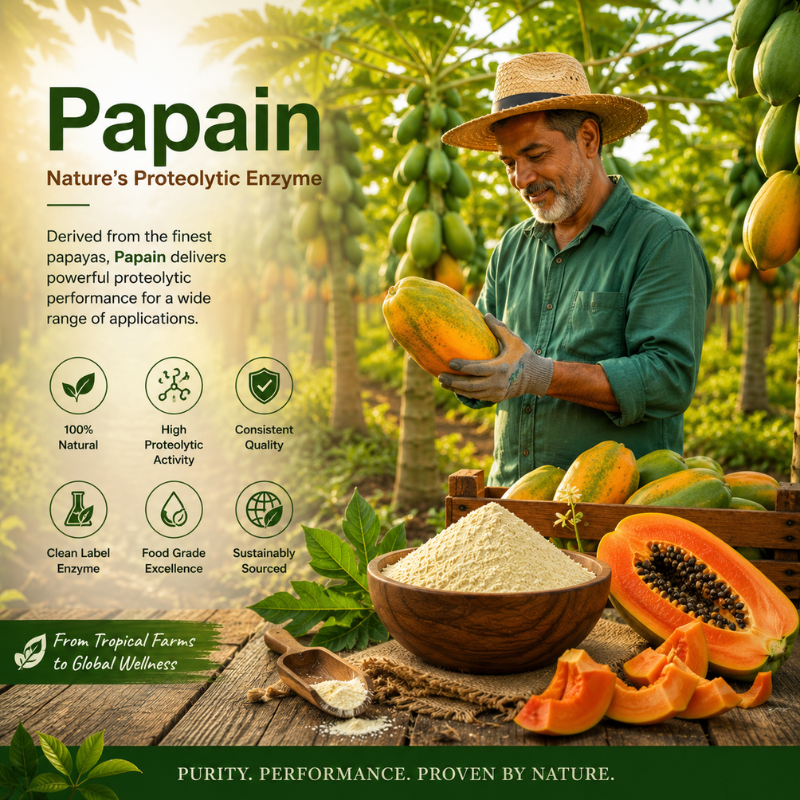
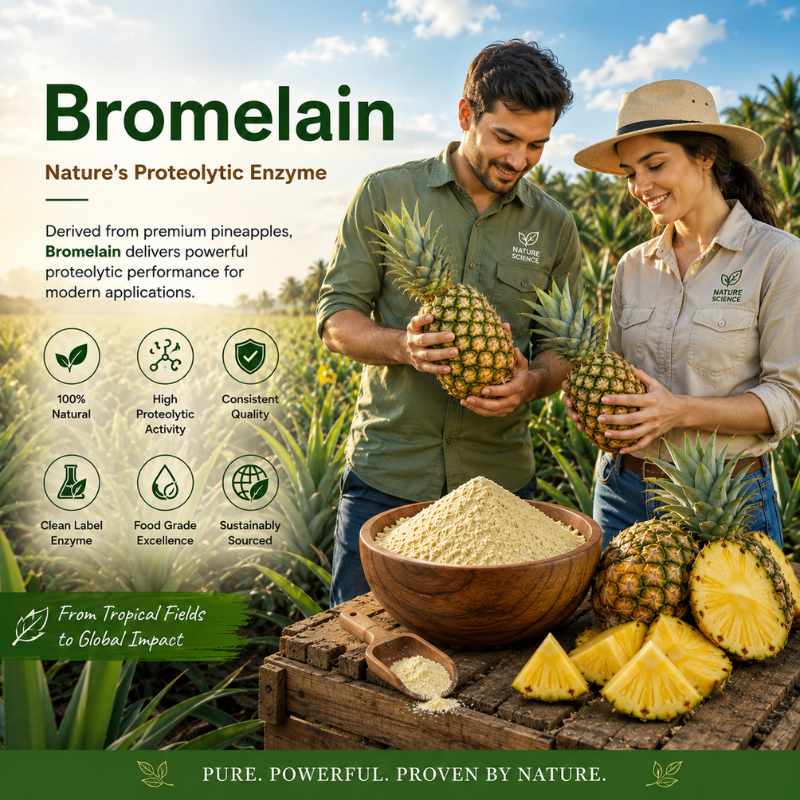
Protease is a general term for protein-digesting enzymes. Papain and bromelain are specific types of proteases derived from papaya and pineapple, respectively.
Food processing, sports nutrition, dairy manufacturing, brewing, baking, animal nutrition, biotechnology, pharmaceuticals, detergents, and leather processing.
Many commercially produced microbial proteases are suitable for vegetarian formulations. Manufacturers should verify the source and production method for individual products.
Request specifications, samples, or pricing from Aspire Biozymes.