Meat Processing
Widely used for controlled protein modification in meat processing.
Explore food processingA comprehensive guide to papain — its papaya source, production methods, enzymatic properties, and applications in meat processing, protein ingredients, brewing, and bakery.
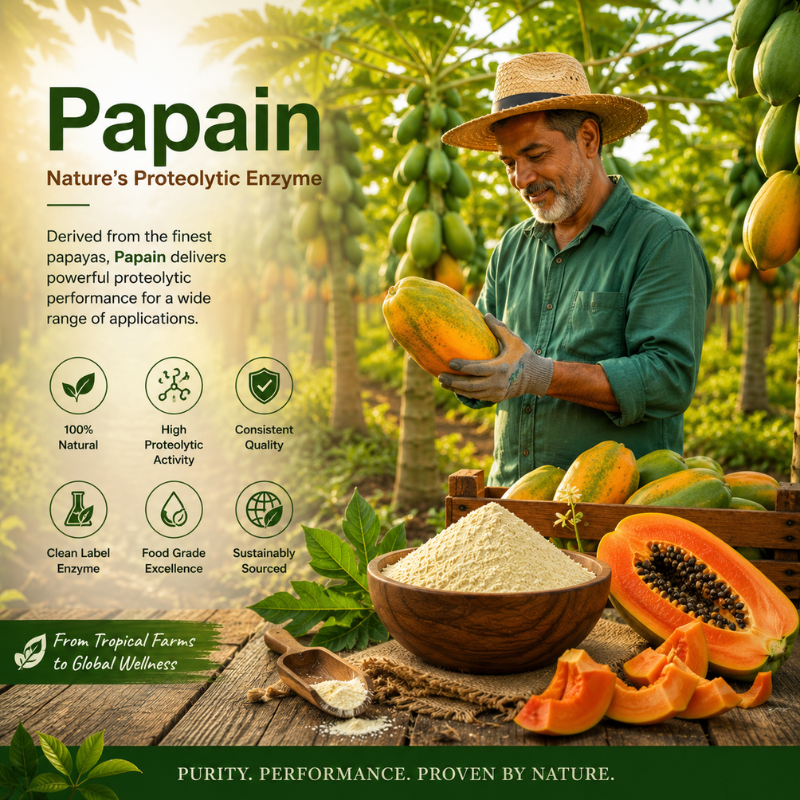
Papain is a proteolytic (protein-digesting) enzyme naturally obtained from the latex of the papaya plant (Carica papaya). It is one of the most widely recognized plant-derived enzymes used in food processing because of its ability to hydrolyze proteins into smaller peptides and amino acids.
Commercial papain is manufactured under controlled conditions to provide standardized enzyme activity suitable for industrial food applications. It is widely used in protein processing, meat tenderization, brewing, bakery, nutritional ingredient manufacturing, and specialty food processing.
Aspire Biozymes supplies food-grade Papain for industrial food manufacturing and ingredient processing applications.
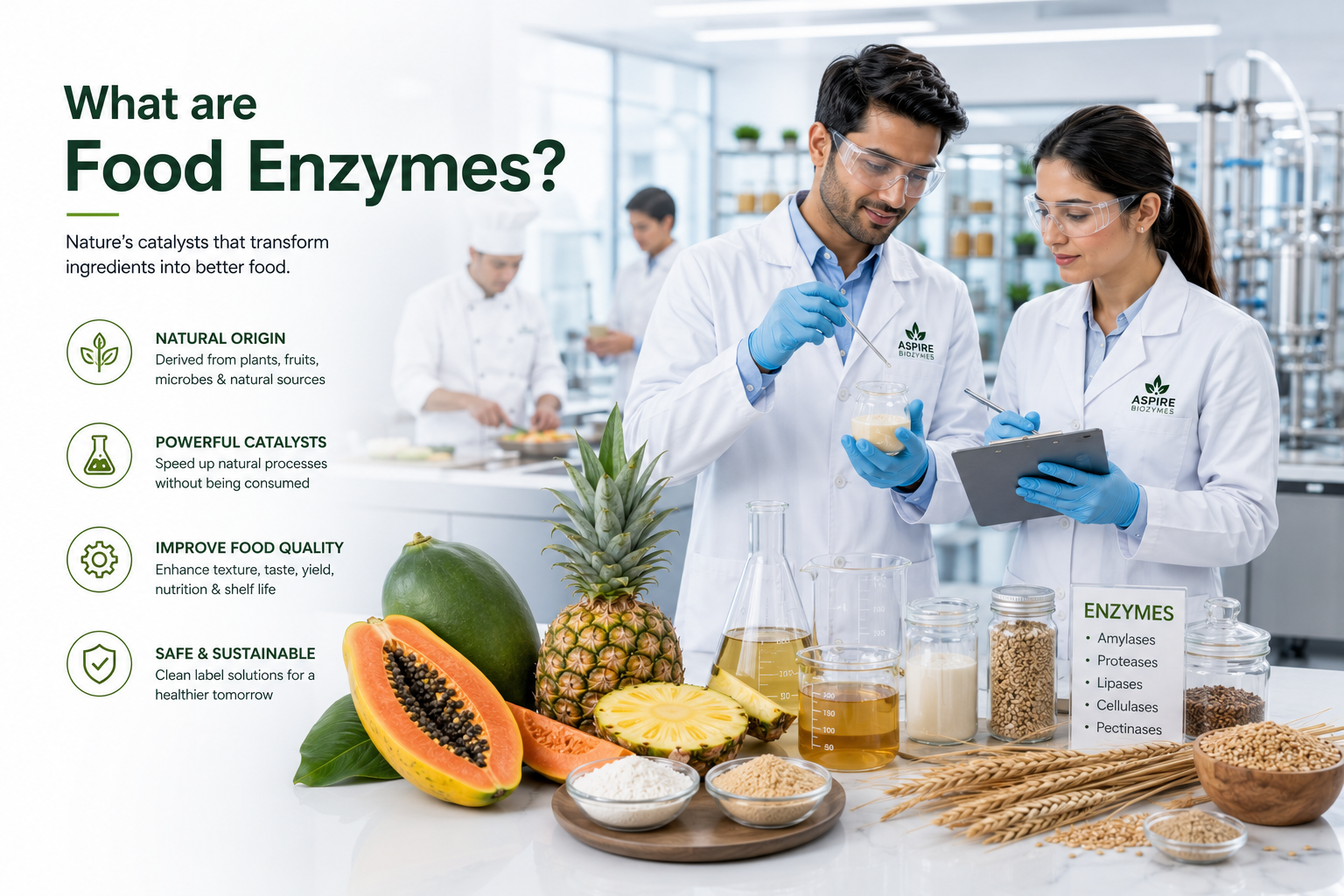
Papain is a cysteine protease, a class of enzymes that hydrolyzes peptide bonds within protein molecules. It belongs to the same enzyme family as bromelain but is derived from a different botanical source.
Papain catalyzes the breakdown of complex proteins into smaller peptides and amino acids, making it useful in applications requiring controlled protein modification. Because papain functions as a catalyst, it is not consumed during the reaction and can continue catalyzing additional protein molecules under suitable processing conditions. Read also: What is Protease? and What is Bromelain?
Papain is obtained from the papaya plant (Carica papaya). The enzyme is primarily found in unripe papaya fruit latex, papaya leaves, papaya stem, and papaya roots (in small quantities).
Commercial food-grade papain is primarily extracted from the latex of immature green papaya fruits, which contains the highest enzyme concentration.
Mechanism
Papain acts by hydrolyzing peptide bonds within protein molecules.
The degree of hydrolysis depends on enzyme activity, substrate characteristics, temperature, pH, processing time, and enzyme concentration.
Production
Commercial papain production involves several carefully controlled manufacturing stages to produce standardized enzyme activity.
Papain activity depends on several processing variables that manufacturers optimize for desired outcomes.
Papain exhibits optimal activity within a defined temperature range. Excessive heat may denature the enzyme.
Functions across a relatively broad pH range, although activity varies depending on processing conditions and substrate type.
Increasing enzyme concentration generally increases the rate of protein hydrolysis until substrate availability becomes limiting.
The extent of protein breakdown depends on the duration of enzymatic treatment.
Different proteins respond differently to papain because protein structure influences enzyme accessibility and hydrolysis.
Papain provides several important functions during food processing.
Primary function is controlled enzymatic breakdown of proteins into smaller peptides.
Used where controlled protein modification is required to influence food texture.
Serves as a processing aid in food manufacturing operations involving protein-rich raw materials.
Incorporated into specialized manufacturing processes for protein ingredients and nutritional products.
Papain is used across multiple food manufacturing sectors.
Widely used for controlled protein modification in meat processing.
Explore food processing
Protein hydrolysates, functional protein ingredients, and nutritional protein systems.
Explore enzyme-fortified proteinsSelected bakery ingredient systems where controlled modification of wheat proteins is beneficial.
Explore bakeryProtein hydrolysates, functional nutritional ingredients, and specialized protein formulations.
Explore dietary supplementsSpecialized food manufacturing processes requiring controlled enzymatic protein hydrolysis.
Commercial papain provides several advantages in food manufacturing. The performance achieved depends on formulation and processing conditions.
Commercial papain preparations are commonly evaluated against defined specifications. Enzyme activity is determined using validated analytical methods appropriate for the product specification.
Papain should generally be stored in a cool, dry environment, in sealed containers, protected from moisture and direct sunlight, according to the manufacturer's storage recommendations.
Papain used in food processing should comply with applicable regulations concerning food enzyme standards, food safety requirements, Good Manufacturing Practices (GMP), processing aid regulations where applicable, ingredient labeling, and country-specific regulatory requirements.
Papain is a cysteine protease naturally extracted from the latex of immature papaya (Carica papaya) fruits. Commercial papain is produced through controlled extraction, purification, and drying processes to provide standardized enzyme activity for industrial food applications.
It hydrolyzes proteins into smaller peptides and amino acids and is widely used in meat processing, protein ingredient manufacturing, brewing, bakery, nutritional ingredient production, and specialty food processing.
Its performance depends on factors such as temperature, pH, enzyme concentration, substrate characteristics, and processing time.
Papain is a plant-derived proteolytic enzyme obtained from the latex of immature papaya (Carica papaya) fruits that hydrolyzes proteins into smaller peptides and amino acids.
Commercial papain is primarily extracted from the latex of immature green papaya fruits, although smaller amounts are present in other parts of the papaya plant.
Papain is used in meat processing, protein hydrolysis, brewing, bakery, nutritional ingredient manufacturing, and specialty food processing applications.
Papain is manufactured through latex collection, filtration, purification, and drying to produce a standardized enzyme preparation suitable for food processing.
Papain activity is influenced by temperature, pH, enzyme concentration, processing time, and the characteristics of the protein substrate. Proper control of these factors helps optimize enzymatic performance in food manufacturing.
Explore food-grade Papain and related enzyme solutions from Aspire Biozymes.