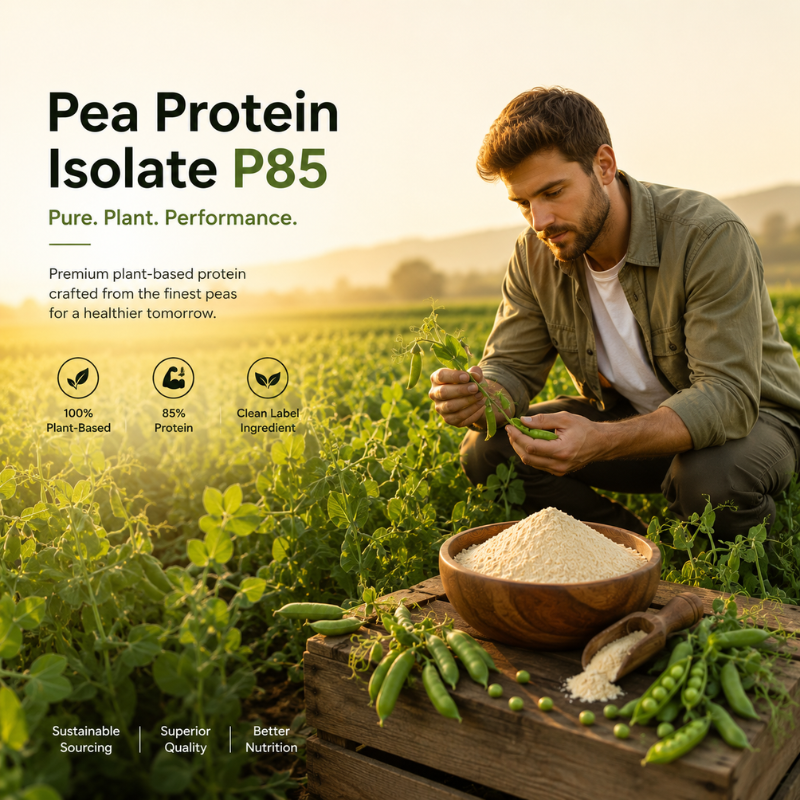
Pea Protein
Obtained from yellow peas (Pisum sativum). High protein content, good emulsification, and broad application across beverages, bakery, supplements, and meat alternatives.
Explore P85A comprehensive guide to plant protein sources, ingredient types, manufacturing processes, functional properties, and applications in modern food manufacturing.
Plant protein refers to protein obtained from plant-based raw materials such as legumes, cereals, oilseeds, and pulses. These proteins are widely used in food manufacturing because they provide functional properties that support the development of high-protein foods, beverages, bakery products, dairy alternatives, nutritional supplements, and specialized nutrition products.
Advances in ingredient processing have improved the purity, functionality, and consistency of commercial plant proteins, making them suitable for a broad range of food applications. Modern plant protein ingredients are available in different forms, including protein concentrates, protein isolates, and hydrolyzed proteins, each offering distinct functional characteristics for food formulation.
Plant proteins are increasingly incorporated into conventional foods as well as products intended for vegetarian and vegan dietary patterns. Their selection depends on factors such as protein content, amino acid composition, processing characteristics, and compatibility with the finished product.
Proteins are large biological molecules composed of amino acids linked together by peptide bonds. They are essential components of living organisms and contribute to the structure and function of cells, tissues, enzymes, hormones, and other biological systems.
Food proteins differ in their amino acid composition, digestibility, solubility, and functional behavior. These characteristics influence how proteins perform during food processing and manufacturing.
Plant protein is protein extracted or concentrated from plant sources through physical, mechanical, and aqueous processing methods. Unlike animal-derived proteins, plant proteins originate from crops such as peas, soybeans, rice, wheat, chickpeas, oats, potatoes, and other legumes or grains. Commercial plant protein ingredients are produced to provide consistent nutritional composition and functional performance for use in food manufacturing.
Numerous crops serve as commercial sources of plant protein, each with distinct nutritional and functional characteristics.
Obtained from yellow peas (Pisum sativum). High protein content, good emulsification, and broad application across beverages, bakery, supplements, and meat alternatives.
Explore P85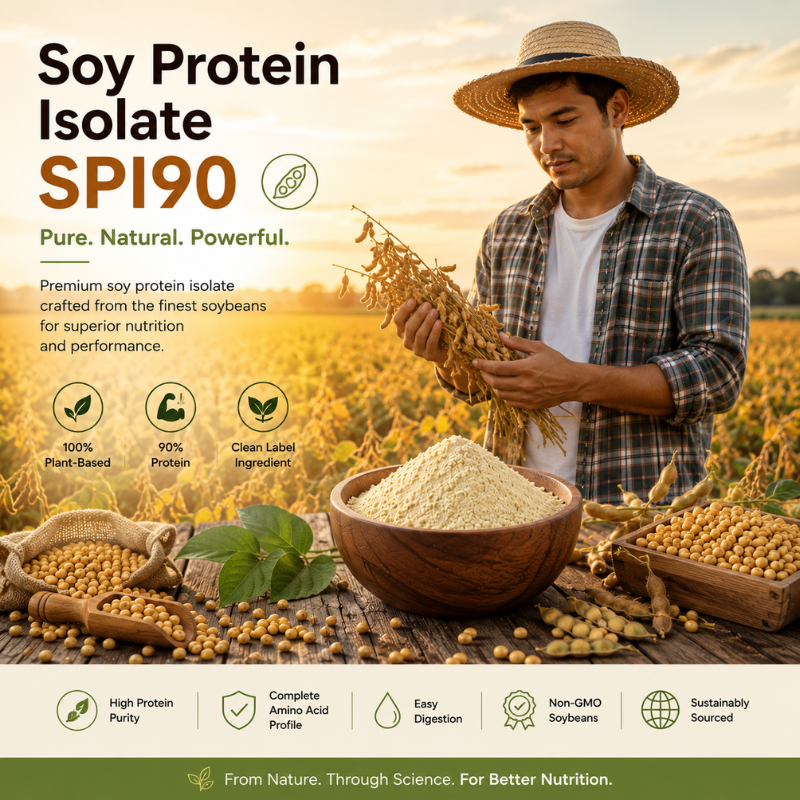
Derived from soybeans (Glycine max). Available as flour, concentrate, and isolate — suitable for dairy alternatives, bakery, and nutritional formulations.
Explore SPI 90Produced from rice through milling and protein concentration processes. Commonly incorporated into protein blends and nutritional products.
Primarily available as wheat gluten, contributing elasticity and structure in bakery products.
Commercial protein ingredients are also produced from additional crops. Availability varies by region and commercial production.
Commercial plant proteins are generally classified into three categories — each with distinct protein concentration and functional properties.
Produced by milling plant materials with minimal protein concentration. Contains relatively high levels of carbohydrates and fiber in addition to protein.
Produced by removing part of the starch and soluble carbohydrates while retaining much of the protein. Typical protein content varies by source and process.
Undergoes further purification to achieve higher protein concentrations. Commonly selected for applications requiring high protein content and improved functional properties.
Manufacturing
Commercial plant protein production generally involves several processing steps to concentrate or isolate the protein fraction from raw crops.
Plant proteins provide several technological functions in food systems that influence product quality and manufacturing performance.
Proteins help retain water in many food products, influencing texture and yield.
Many plant proteins stabilize oil-in-water emulsions in beverages, sauces, dressings, and dairy alternatives.
Certain plant proteins form gels under controlled processing conditions, contributing to structure and texture.
Some plant proteins stabilize air bubbles during mixing, useful in bakery and dessert applications.
Protein solubility varies by source, processing method, pH, and formulation — critical for beverage applications.
Plant proteins are incorporated into numerous food categories. The specific protein ingredient is selected based on formulation requirements and processing conditions.
Food manufacturers evaluate several characteristics when selecting plant proteins. These factors influence product performance and manufacturing efficiency.
Higher purity isolates support high-protein label claims and nutritional targets.
Essential amino acid composition varies by plant source and affects nutritional positioning.
Dispersibility and solubility are critical for beverages and homogeneous food matrices.
Emulsion stability supports dairy alternatives, beverages, and sauces.
Neutral-tasting proteins support clean-label and consumer-acceptable finished products.
Processing tolerance during baking, UHT, and extrusion maintains product integrity.
Ingredient performance must align with commercial manufacturing methods.
Consistent supply and economical options like concentrates support scalable production.
Commercial plant proteins are commonly evaluated against defined specifications. Additional requirements depend on customer needs and product applications.
Plant protein ingredients should comply with applicable regulations governing food ingredients, labeling, safety, and manufacturing practices. Requirements vary according to the destination market.
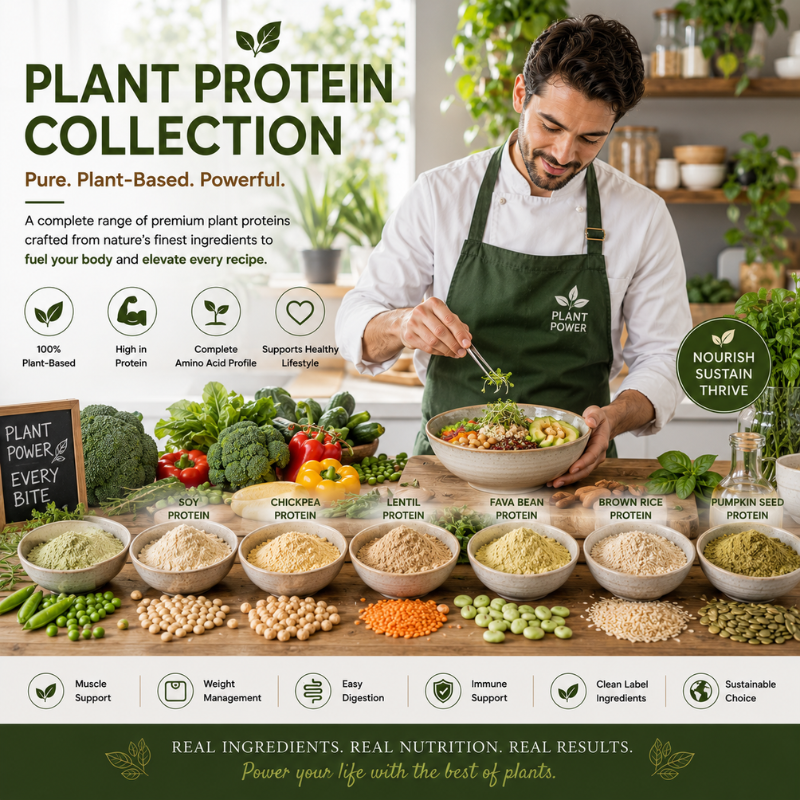
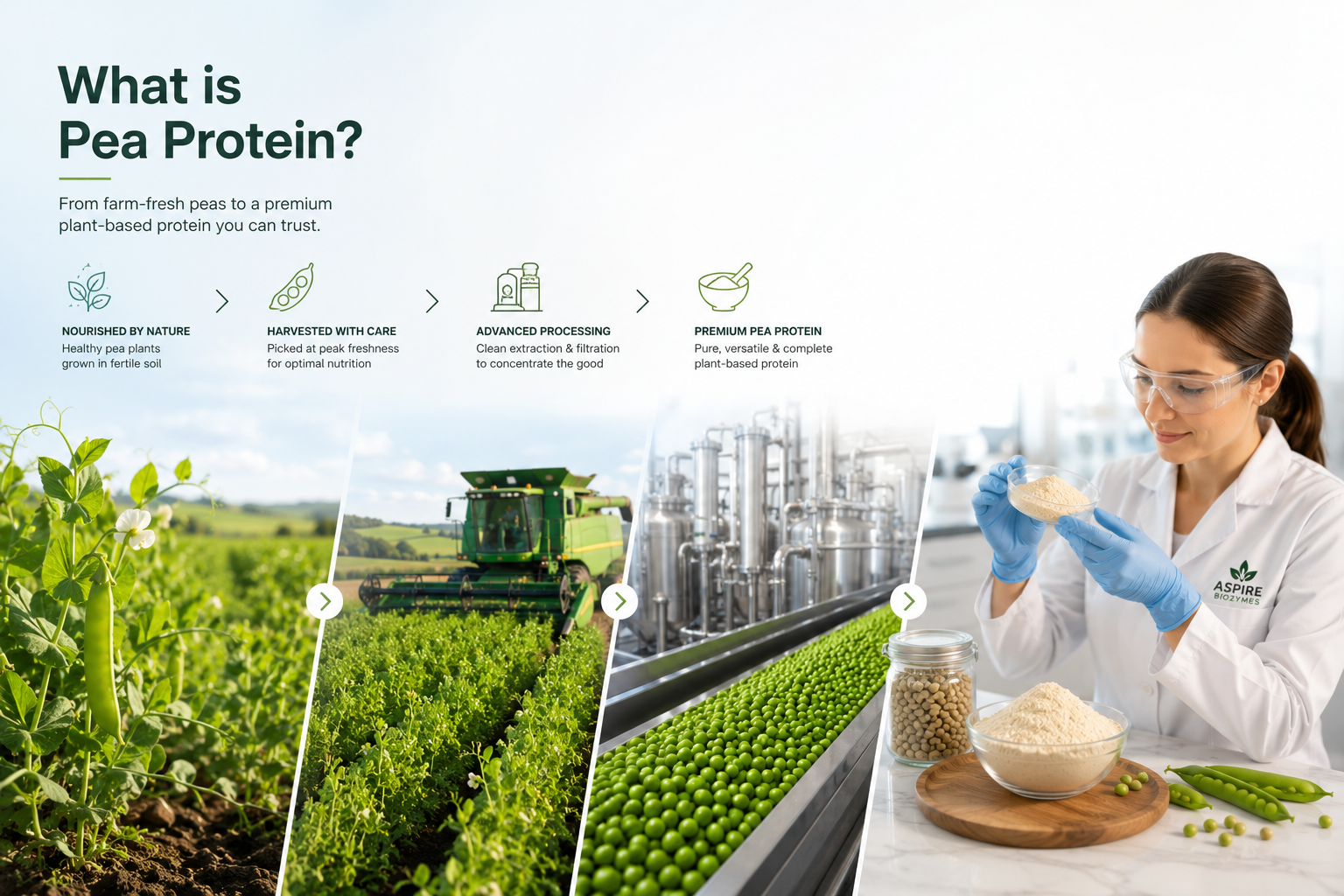
Plant protein is obtained from crops such as peas, soybeans, rice, wheat, and other legumes or cereals through controlled processing methods that concentrate or isolate the protein fraction.
Commercial plant proteins are available as flours, concentrates, and isolates, each offering different nutritional compositions and functional properties across beverages, dairy alternatives, bakery, meat alternatives, and nutritional supplements.
Selection depends on protein concentration, processing characteristics, solubility, and compatibility with the intended food formulation.
Plant protein is protein obtained from plant sources such as peas, soybeans, rice, wheat, and other crops for use in food and nutritional products.
The three main types are protein flours, protein concentrates, and protein isolates.
Common commercial sources include peas, soybeans, rice, wheat, chickpeas, lentils, oats, faba beans, potatoes, and sunflower.
Plant protein is widely used in beverages, dairy alternatives, bakery products, meat alternatives, sports nutrition, dietary supplements, meal replacements, breakfast cereals, and functional foods.
Selection is based on factors such as protein concentration, amino acid composition, solubility, emulsification, processing performance, flavor profile, stability, and compatibility with the intended food application.
Explore our plant protein portfolio or request specifications from Aspire Biozymes.