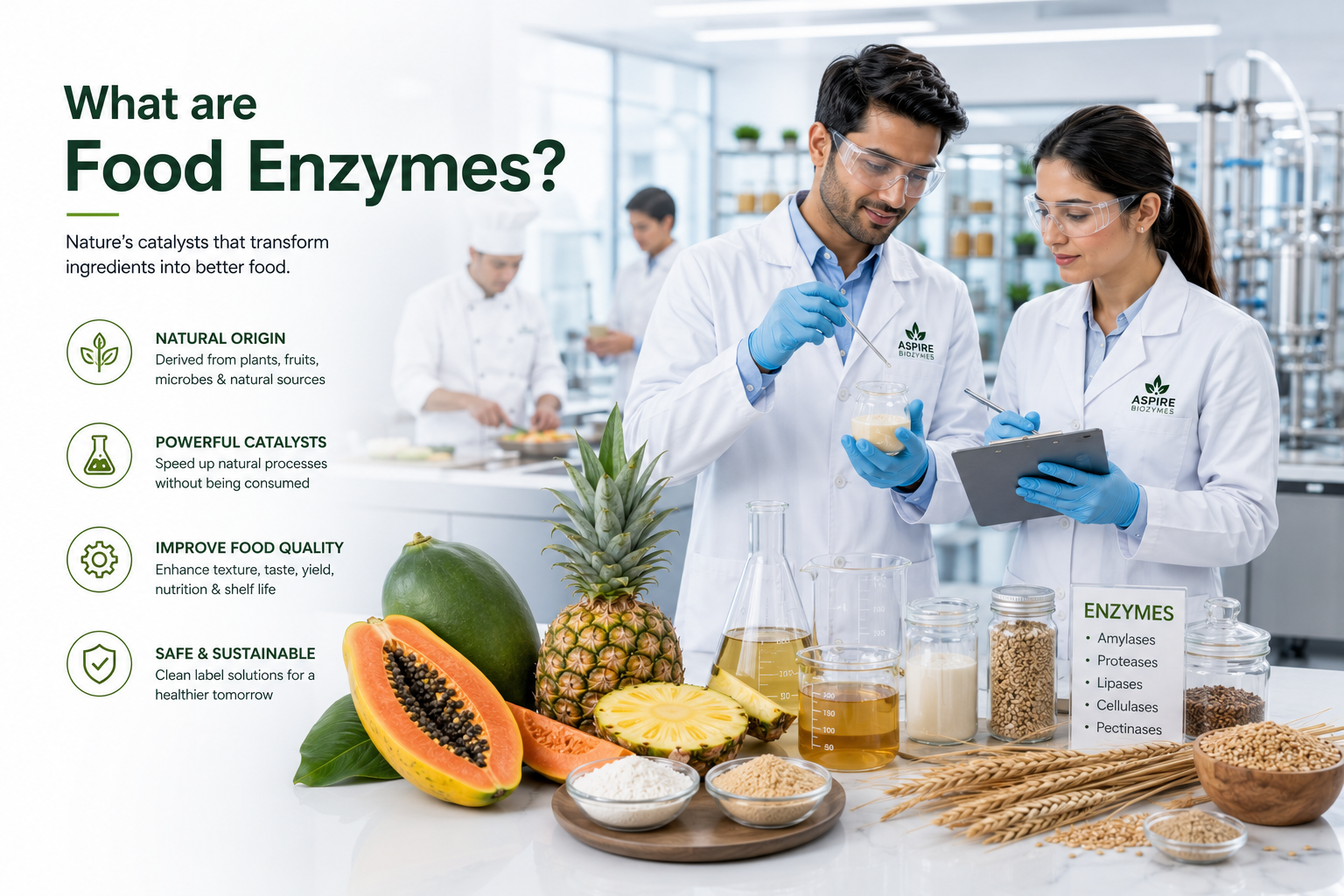
Enzyme Knowledge
How Enzymes Improve Protein Digestion
The role of proteolytic enzymes in breaking proteins into absorbable peptides and amino acids — in human digestion and commercial food processing.
Breaking protein down for absorption
Protein is an essential nutrient that supports muscle maintenance, tissue repair, enzyme production, hormone synthesis, and many other physiological functions. Before the body can use dietary protein, however, it must first be digested into smaller molecules that can be absorbed through the small intestine.
This digestion process depends on proteolytic enzymes, commonly known as proteases, which break complex protein molecules into peptides and amino acids. In addition to the enzymes naturally produced by the human digestive system, food-grade enzymes are also widely used in food processing and nutritional formulations to modify protein functionality for specific manufacturing applications.
Understanding how enzymes improve protein digestion helps food manufacturers develop innovative protein products while providing consumers with a better understanding of protein metabolism.
Why protein digestion is necessary
Proteins are large, complex molecules made up of amino acids linked together by peptide bonds.
Because intact protein molecules are too large to pass through the intestinal wall, they must first be broken down into smaller peptides, dipeptides, tripeptides, and individual amino acids. Only after this process can these nutrients be absorbed into the bloodstream and utilized by the body.
Digestion pathway
How protein digestion occurs
- Consumption — protein enters the digestive system through plant proteins, dairy, meat, fish, eggs, legumes, fortified foods, and supplements
- Stomach — hydrochloric acid unfolds protein structures through denaturation; pepsin begins breaking proteins into shorter peptide chains
- Small intestine — pancreatic proteolytic enzymes including trypsin, chymotrypsin, elastase, and carboxypeptidases continue breaking proteins into smaller peptides and amino acids
- Absorption — specialized transport systems absorb amino acids, dipeptides, and tripeptides into the bloodstream for normal metabolic processes
What are proteolytic enzymes?
Proteolytic enzymes, also called proteases, are enzymes that catalyze the hydrolysis of peptide bonds in proteins.
Their primary function is to convert complex proteins into smaller, absorbable molecules. Proteases are naturally present in the digestive system and are also produced commercially for use in food manufacturing and nutritional ingredient applications.
Protease
Broad-spectrum protein-digesting enzymes
Protease is a broad term describing enzymes that hydrolyze proteins. Food industry applications include protein ingredient processing, functional food manufacturing, nutritional formulations, ingredient modification, and specialized food processing.
View ProteasePapain
Proteolytic enzyme from papaya latex
Papain is a proteolytic enzyme obtained from the latex of the papaya fruit (Carica papaya). Applications include protein processing, food manufacturing, ingredient systems, meat processing, and nutritional products. Papain is valued for its broad activity across a range of protein substrates.
View PapainBromelain
Proteolytic enzymes from pineapple stems
Bromelain is a group of proteolytic enzymes extracted primarily from pineapple stems (Ananas comosus). Applications include protein processing, food manufacturing, nutritional ingredient systems, and functional food formulations. Like papain, bromelain is commonly used because of its ability to hydrolyze proteins under appropriate processing conditions.
View BromelainEnzyme-assisted protein processing
In commercial food manufacturing, enzymes are used to modify proteins for specific product characteristics.
Depending on the formulation and processing conditions, enzyme-assisted protein processing may help modify protein structure, produce smaller peptides, improve ingredient functionality, adjust texture, support processing efficiency, and develop specialized protein ingredients. The exact outcome depends on the protein source, enzyme selection, reaction conditions, and manufacturing process.
Explore protein + enzyme solutions and enzyme-fortified proteins for formulation options.
Factors that influence enzyme activity
The effectiveness of protein-digesting enzymes depends on several factors.
Temperature
Each enzyme has an optimal operating temperature. Temperatures above or below this range may reduce enzyme activity.
pH
Proteolytic enzymes function within specific pH ranges. Pepsin is most active in the acidic environment of the stomach, while trypsin functions best in the more neutral conditions of the small intestine. Commercial food enzymes are also selected according to the pH conditions of the manufacturing process.
Enzyme concentration
The amount of enzyme used influences the rate of protein hydrolysis. Manufacturers determine appropriate enzyme levels according to the intended application.
Processing time
The duration of enzyme exposure affects the degree of protein hydrolysis. Controlled processing helps manufacturers achieve consistent product characteristics.
Protein source
Different proteins vary in their structure and susceptibility to enzymatic hydrolysis. Pea protein, soy protein, dairy proteins, and wheat proteins may each respond differently under identical processing conditions.
Applications in food manufacturing
Enzyme-assisted protein processing is widely used across sports nutrition, functional foods, plant-based foods, clinical nutrition, and commercial food processing.
- Sports Nutrition
- Functional Foods
- Plant-Based Foods
- Clinical Nutrition
- Protein Modification
- Ingredient Development
- Customized Protein Blends
Applications by industry
Sports nutrition
Protein powders, recovery beverages, meal replacements, and performance nutrition.
Functional foods
Protein bars, functional beverages, high-protein foods, and nutritional snacks.
Plant-based foods
Plant proteins, dairy alternatives, protein beverages, and vegan nutritional products.
Clinical nutrition
Protein ingredients used in specialized nutritional products may undergo controlled processing depending on formulation objectives and regulatory requirements.
Food processing
Protein modification, ingredient development, functional ingredient systems, and customized protein blends.
Aspire Biozymes enzyme solutions
Aspire Biozymes supplies food-grade enzymes suitable for protein processing and food manufacturing.
Our portfolio includes protease, papain, bromelain, alpha amylase, and lipase. We also develop enzyme-fortified protein solutions, protein + enzyme blends, customized ingredient systems, and technical formulation support.
Our technical team works with manufacturers to select suitable enzyme solutions based on product requirements and processing conditions.
Common misconceptions
Enzymes do not become part of the final nutrient
Enzymes catalyze reactions but are not nutrients themselves. Their role is to facilitate the breakdown or modification of food components.
Different enzymes have different functions
Proteases digest proteins, amylases act on starches, and lipases hydrolyze fats. Each enzyme has a specific substrate.
Protein processing is carefully controlled
Commercial enzyme applications are designed with defined processing conditions to achieve consistent product characteristics while maintaining quality and safety.
Why choose Aspire Biozymes?
Aspire Biozymes combines expertise in plant proteins and food enzymes to provide integrated ingredient solutions for the food and nutrition industry.
- Premium food-grade enzymes
- Plant protein expertise
- Customized protein-enzyme systems
- Technical formulation support
- Commercial manufacturing capabilities
- Comprehensive product documentation
- Reliable global supply
We collaborate with manufacturers to develop ingredient solutions tailored to their specific applications and production requirements.
Related guides & products
Protein Digestibility
Read the guide
What is Protease?
Read the guide
Protein + Enzyme Solutions
Explore solutionsScientific summary
Proteolytic enzymes are essential for protein digestion because they hydrolyze peptide bonds, converting complex proteins into peptides and amino acids that can be absorbed by the body.
Naturally occurring enzymes such as pepsin, trypsin, and chymotrypsin perform this function during digestion, while food-grade enzymes such as protease, papain, and bromelain are widely used in commercial food processing to modify protein functionality and develop specialized ingredient systems.
Enzyme activity depends on factors including temperature, pH, enzyme concentration, processing time, and protein source.
Frequently asked questions
Proteolytic enzymes break proteins into smaller peptides and amino acids, allowing them to be absorbed through the small intestine and utilized by the body.
Proteolytic enzymes, or proteases, are enzymes that hydrolyze proteins by breaking peptide bonds.
Protease is a general term for protein-digesting enzymes. Papain is derived from papaya latex, while bromelain is extracted primarily from pineapple stems. All three are used in food processing and protein modification, but they differ in origin and specific enzymatic properties. See our guides on protease, papain, and bromelain.
Food-grade enzymes are used to modify ingredients, improve processing efficiency, optimize functional properties, and support the production of specialized food and nutrition products.
Enzyme processing primarily modifies protein structure and functionality. The extent of these changes depends on the enzyme used, processing conditions, and the specific application.
Ready to explore enzyme-assisted protein solutions?
Discover food-grade enzymes and protein + enzyme blends from Aspire Biozymes.